Letter to the Editor:


Senate Bill SB79 is labeled “affordable housing” legislation but will produce little to no affordable housing. It appears specifically designed to destroy stable single-family neighborhoods and neighborhood commercial development, to the benefit of real estate speculators and developers.
SB 79 is currently before the State legislature. It has passed in the Senate and is now being considered by the Assembly. It specifically encourages the densification of residential neighborhoods and commercial property within one-half mile of major bus or rail transit stops. SB79 defines three types, or Tiers, of major transit stops with associated density targets.
SB79 Will Destroy Neighborhoods Along Olive Avenue
Bus Rapid Transit (BRT) stops, such as those along the North Hollywood to Pasadena BRT line currently under development, fall into the SB79 Tier 2 definition of a major transit stop. In the case of BRT stations in Burbank, Glendale, Eagle Rock and Pasadena, SB79 mandates the following residential development standards:



Within ¼ mile of a BRT Station, SB79:
- Prohibits City Council from imposing any height limits less than 65 feet.
- Prohibits City Council from imposing any maximum density standard of less than 100 dwelling units per acre.
- Prohibits City Council from enforcing any other local development standard or combination of standards that would prevent achieving a residential floor area ratio (FAR) of up to 3:1 in size.
- Provides for even higher densities with provision of minimal levels of affordable housing.
Within 1/2 mile of a BRT Station SB79:
- Prohibits City Council from imposing a height limit of less than 55 feet.
- Prohibits City Council from imposing any maximum density standard of less than 80 dwelling units per acre.
- Prohibits City Council from enforcing any other local development standard or combination of standards that would prevent achieving a residential floor area ratio of up to 2.5.
- Provides for even higher densities with provision of minimal levels of affordable housing.
In addition, due to other State Laws:
- Units built would not be subject to any parking requirements due to AB2097 (2022 – Laura Friedman)
- No rent control is required for first 15 years (AB1482, 2019)
SB79 Targets Single Family Neighborhoods
Areas shaded in pink on the following maps fall into one of the three SB79 tiers and would be subject to “by-right” densification.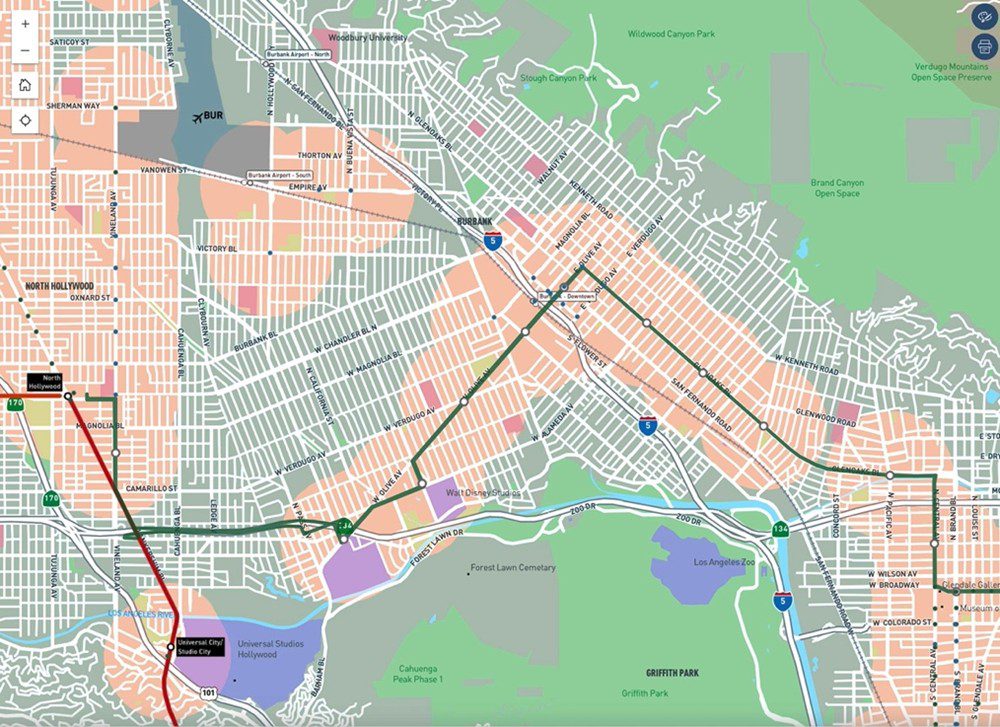
Figure 1 – North Hollywood and Burbank Areas Shaded in Pink Are Within ½ Mile of a Major Transit Stop (Source: LA Metro)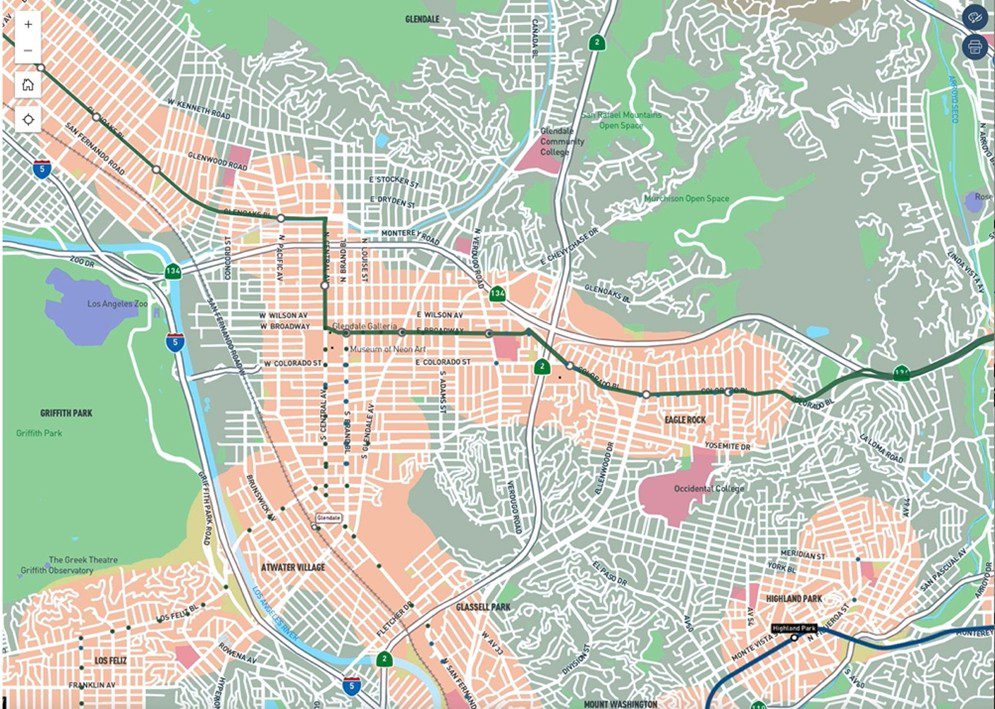
Figure 2 –Glendale and Eagle Rock Areas Shaded in Pink Are Within ½ Mile of a Major Transit Stop (Source: LA Metro)
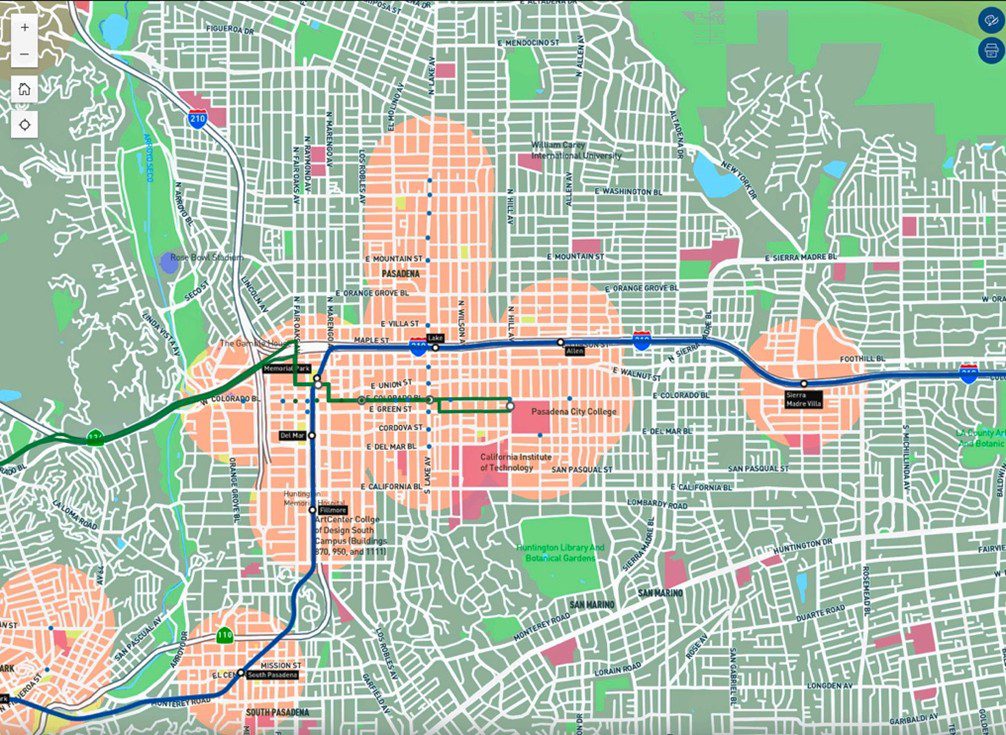
Figure 3 – Pasadena Areas Shaded in Pink Are Within ½ Mile of a Major Transit Stop (Source: LA Metro)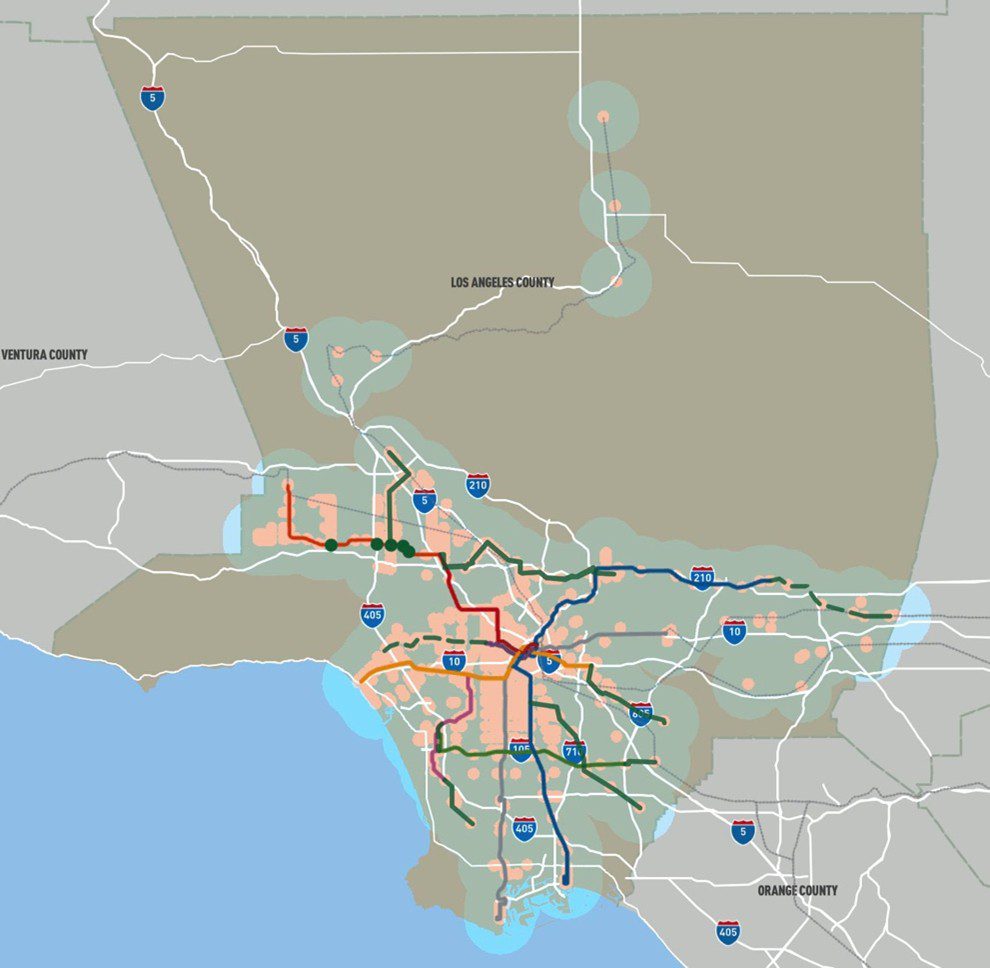
Figure 4 – Los Angeles County Areas Shaded in Pink Are Within ½ Mile of a Major Transit Stop (Source: LA Metro)
You can access the full map for the LA Metro area by clicking on this link to see all of the areas that are within ½ mile of a Major Transit Stop as defined in Public Resources Code 21064.3 – the definition used by most cities, and thus that would be likely be impacted: https://experience.arcgis.com/experience/ed7f152959744dbc907e1c9226470705#data_s=id%3AdataSource_13-18bf84ba4e8-layer-16%3A221
SB79 targets single-family neighborhoods, which are predominately owner-occupied, and would thus replace a lot of owner-occupied housing with renter housing. SB79 provides protection against the demolition of multi-family rent controlled units that have been occupied by tenants within the last five years. This means that developers will first target single-family homes and commercial areas for conversion to large-scale apartment or condo buildings. Then they will do what is happening in Hollywood, and evict tenants in low-density rent-controlled units, demolish the existing apartment building, and wait 5 years before doing the new construction.
Home ownership is the primary hedge against housing cost inflation and the primary way the middle-class builds wealth. For many seniors the goal is to pay-off, or substantially reduce, their house loan principal by retirement, to reduce housing costs. In addition, home equity is a major resource for seniors and families as they face increasing medical and eldercare expenses and other emergencies.
SB79 will work against home-ownership. SB79 encourages real estate speculation, one of the primary drivers of the increase in housing costs in California and will thus make home ownership even less affordable in California. Nearly 20 percent of homes in California are now owned by investors rather than families according to the real estate data platform BatchData. SB79 will make this worse. In the first quarter of 2025, investors purchased 26.8% of all home sales, thanks to laws such as the most recent version of California’s ADU legislation, driving up home-ownership costs as families compete with speculators for homes.
SB79 would replace single-family homes with largely rental units, subjecting tenants, including seniors, to ever-increasing rental costs and eliminating the ability to build equity. By allowing by-right development of 4-6 story apartment buildings right next to single-family homes in stable neighborhoods, SB79 will drive out owners, and/or leave seniors and families in previously nice communities, to hold out and live next door to both construction and out-of-scale apartment buildings, while destroying their community and support system of neighbors.
SB79 Is Anti-Affordable Housing Legislation
SB79 is not affordable housing legislation and is unlikely to substantially increase the stock of affordable housing for seniors and families. Under SB79, if a developer builds a 4-6 story building with 10 units, then no affordable housing is required. SB79 provides density bonuses for and only requires the provision of 7% extremely-low-income, or 10% very-low-income, or 13% low-income units when developers build 11 or more units on a lot. In contrast, for example, the SCAG region, in which we and approximately 48% of California households live, had a requirement to provide for the new construction of 26.2% very-low and 15.4% low-income units for a total of production of 41.6% low-income units in the current Housing Element cycle. SB79 thus works against meeting affordable housing goals by allowing by-right development inconsistent with affordable housing need and current city Housing Elements and policies.
Under SB79, if a developer builds a 4-6 story building with 10 units, then no affordable housing is required. Developers typically prefer constructing market-rate and luxury units, so the additional density bonuses for provision of affordable housing may not actually generate much affordable housing. Also, since the legislation encourages development on lots occupied by single-family homes, given typical lots sizes, developers may not want to build much higher than 5-6 stories and ten units. Rather than build affordable housing consistent with the City’s Housing Element targets, developers will instead build SB79 market-rate and luxury housing. SB79 will also therefore not generate much transit ridership, since transit riders are disproportionately low income, and SB79 will result in little in the way of low-income housing near transit stops.
The Bill Encourages the Destruction of Single-Family Homes
This bill encourages the destruction of single-family homes. In Burbank many of the single-family lots along the BRT alignment are 5,445 – 7,260 square feet in size. Given SB79 specifies that the “average total area of floor space for the proposed units shall not exceed 1,750 net habitable square feet” a developer could have some very large apartments averaged with smaller apartments and, if they only constructed 10 units per development, they wouldn’t be required to provide any affordable housing. On a 6,000 square foot lot in Tier 2, they could build ten 1,500 square foot units and that would be consistent with the density allowances in SB79. On a 7,000 square foot lot, they could build ten 1,750 square-foot units. SB79 is clearly designed to allow for, and encourage, this scale of development of market-rate and luxury housing.
So, owner-occupied single-family neighborhoods are going to see single-family homes randomly replaced with predominately 5-6 story apartment or condo buildings, likely with 10 units each and no affordable housing as a result of this bill. SB79 will wipe out largely owner-occupied single-family homes, further decreasing California’s very low home ownership rates – the second lowest home-ownership rate in the nation, and converting more and more people to renters subject to annual rent increases, unable to build equity.
SB79 is part of California’s apparent war on homeownership and the middle class. It is not affordable housing legislation. Cities in California, as part of their recent Housing Element updates, have already planned for how to meet their share of the State’s projection of housing need. This legislation is not needed and works against the ability of cities to meet their State-mandated housing affordability target. This legislation overrides local planning and local land use control, will not produce much affordable housing, and will result in an unpredictable pattern and level of densification which is inconsistent with local infrastructure planning and likely capacity.
Call Your State Legislators and Tell Them To Vote “NO”
Help keep Burbank, Burbank. Please contact your State Representatives and ask them to vote against SB79. You can find your State Representatives at: https://findyourrep.legislature.ca.gov
For Burbank, contact: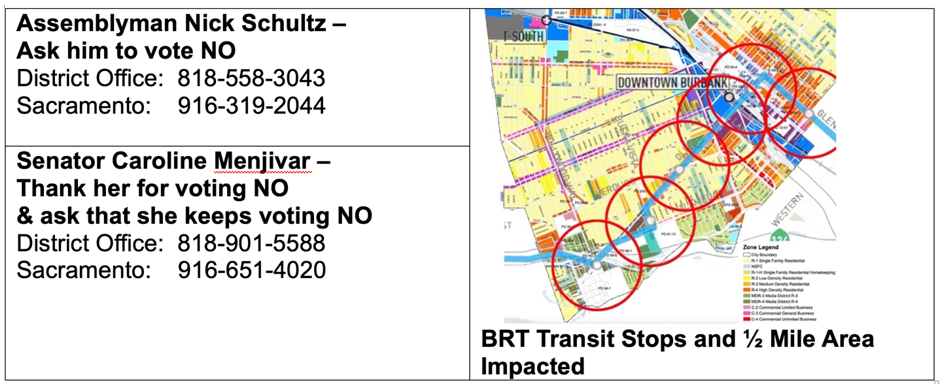
Susan O’Carroll
Burbank