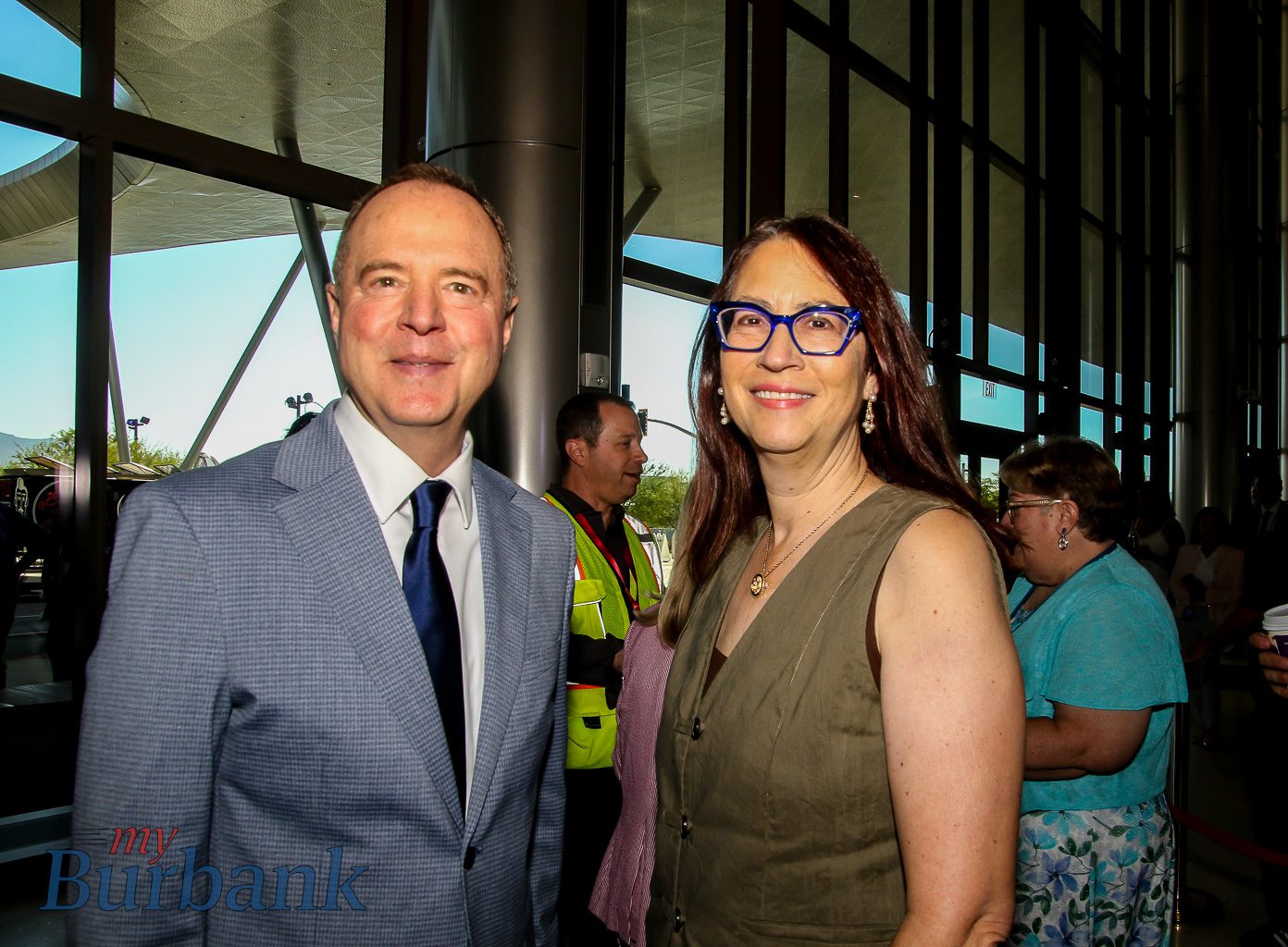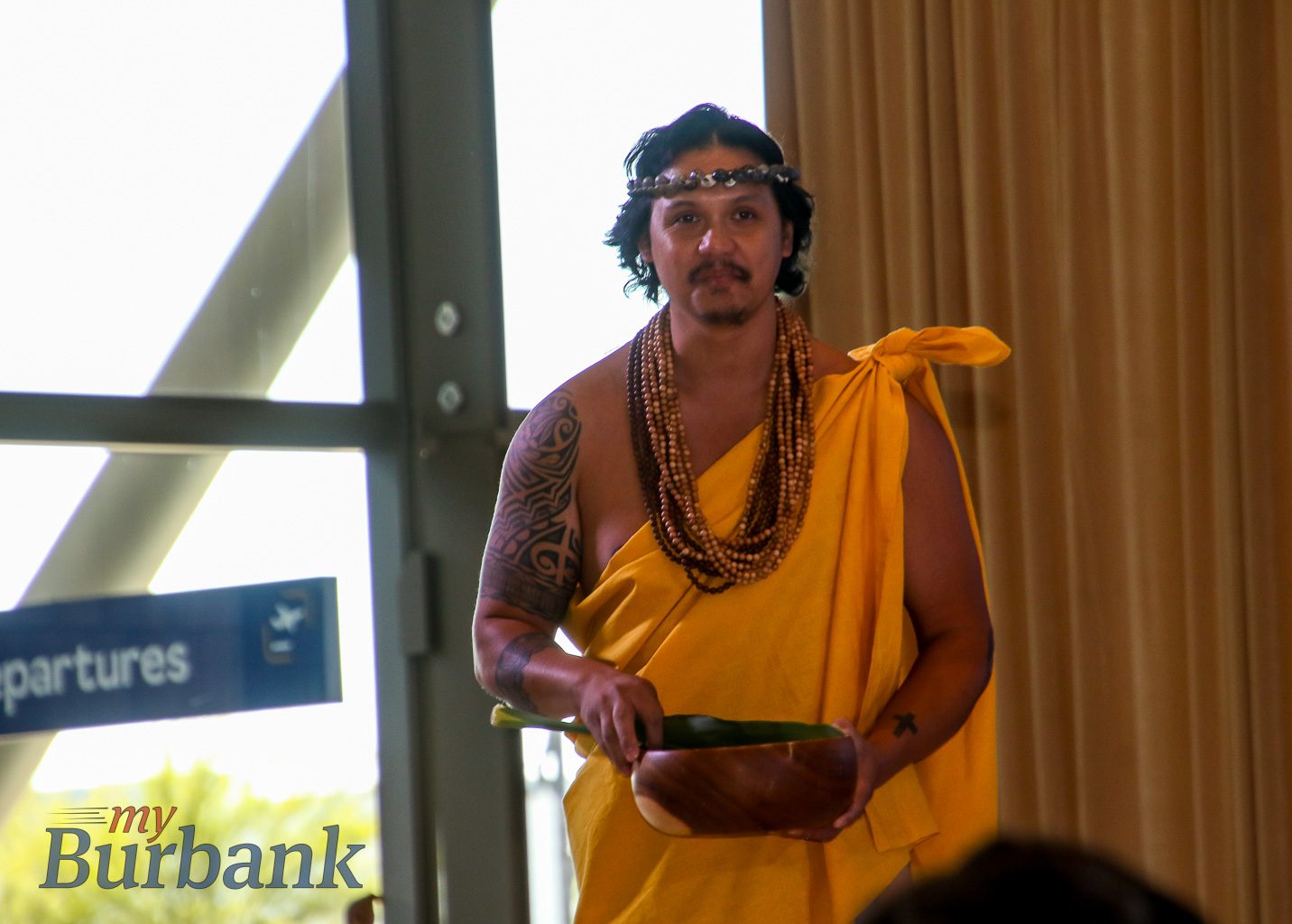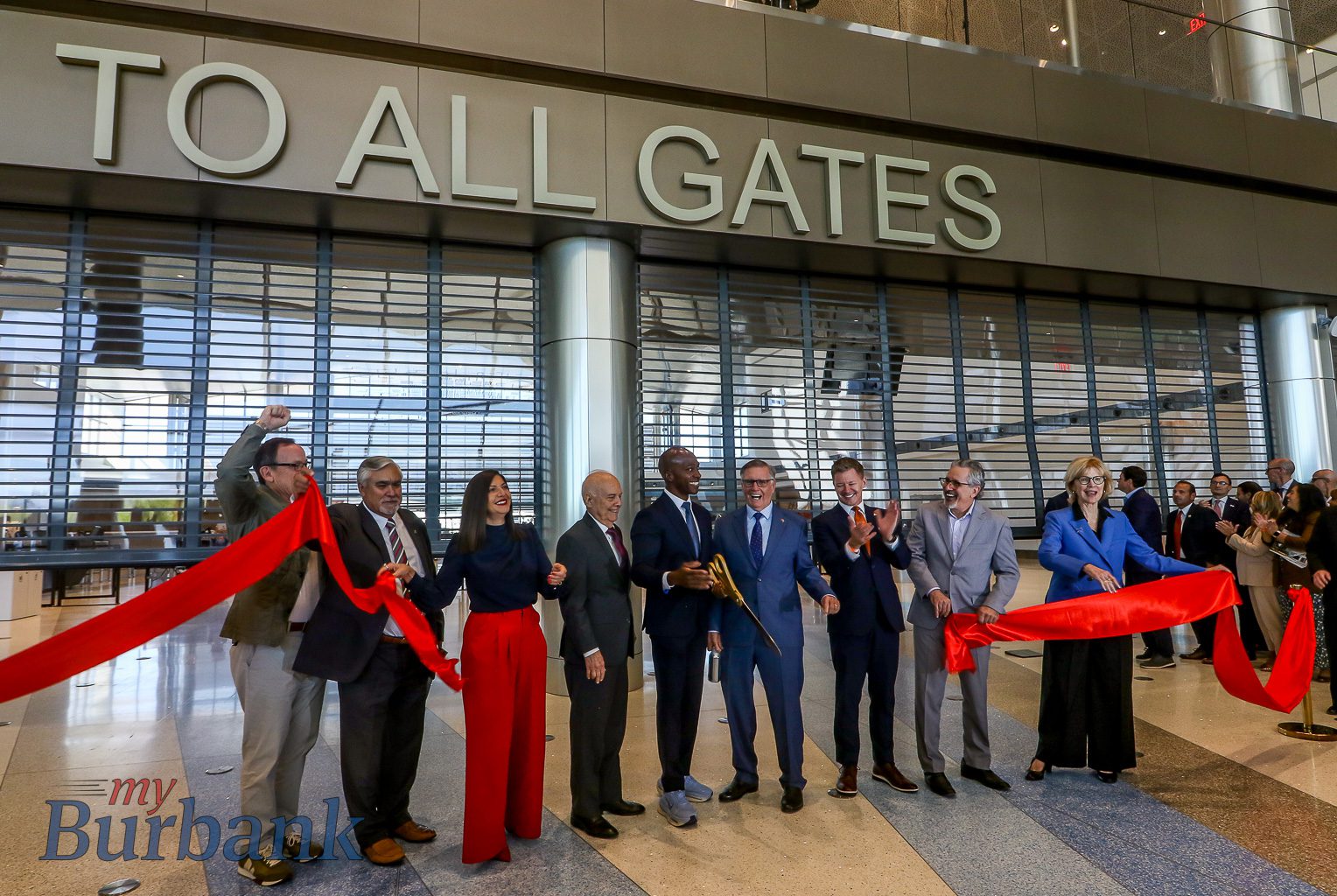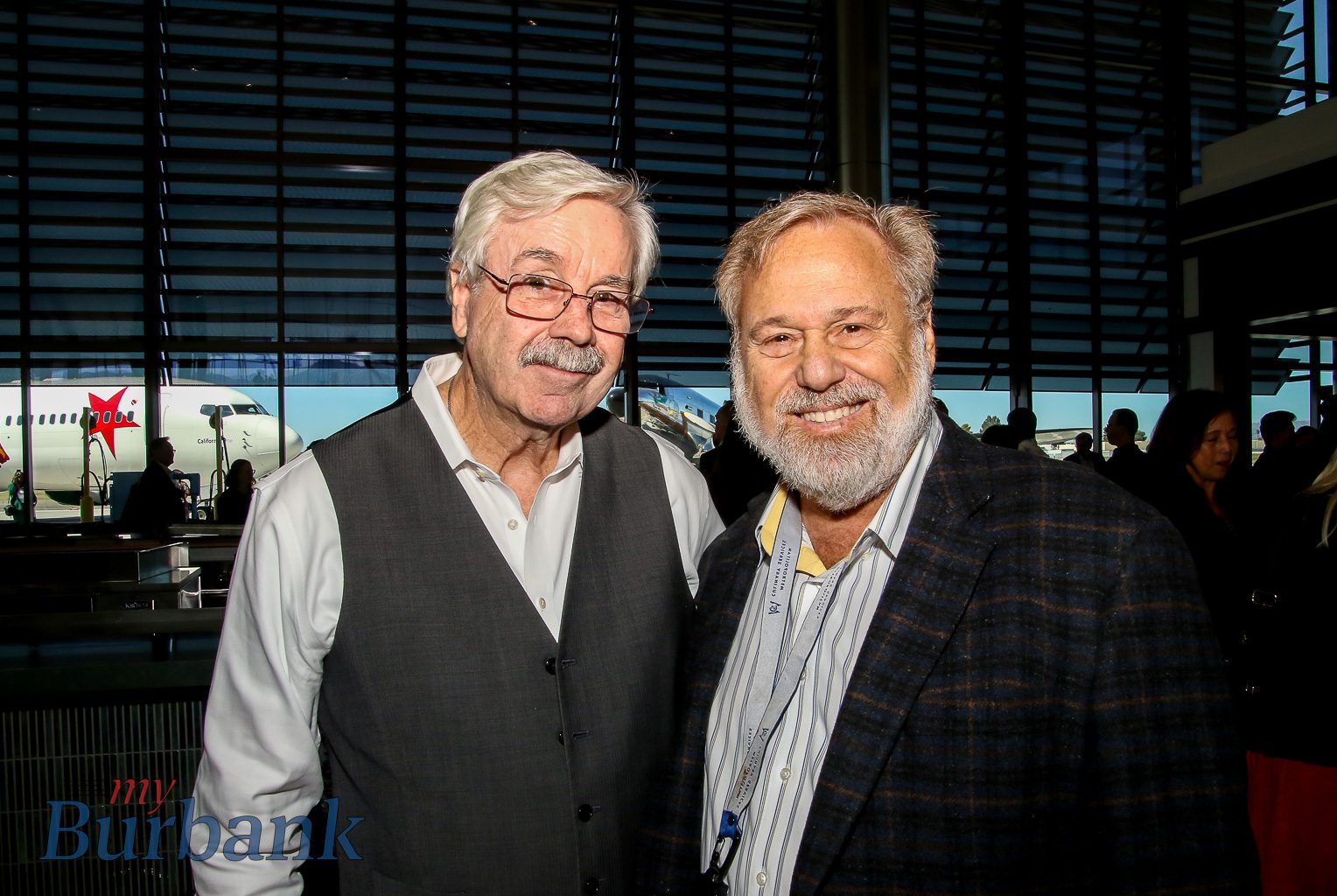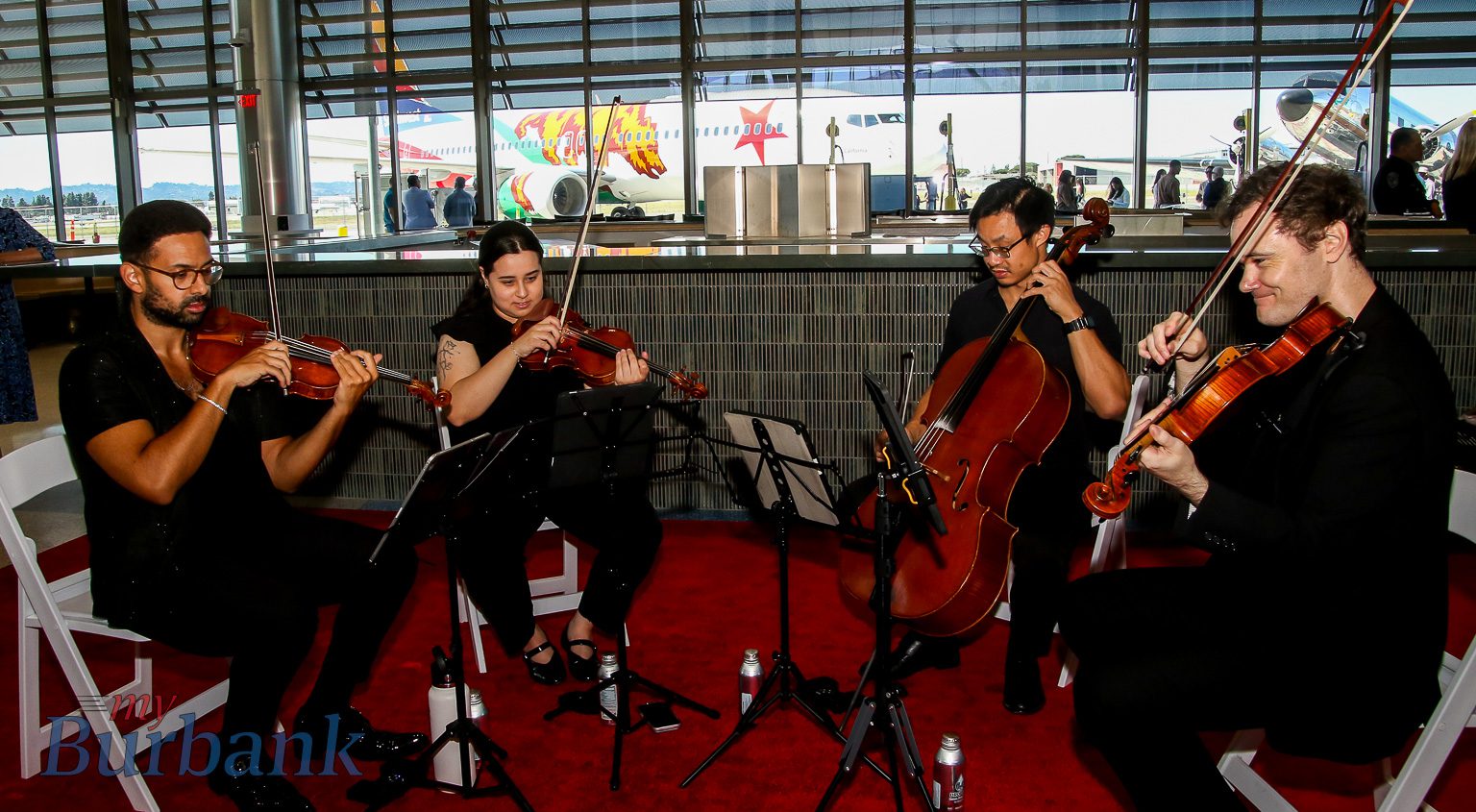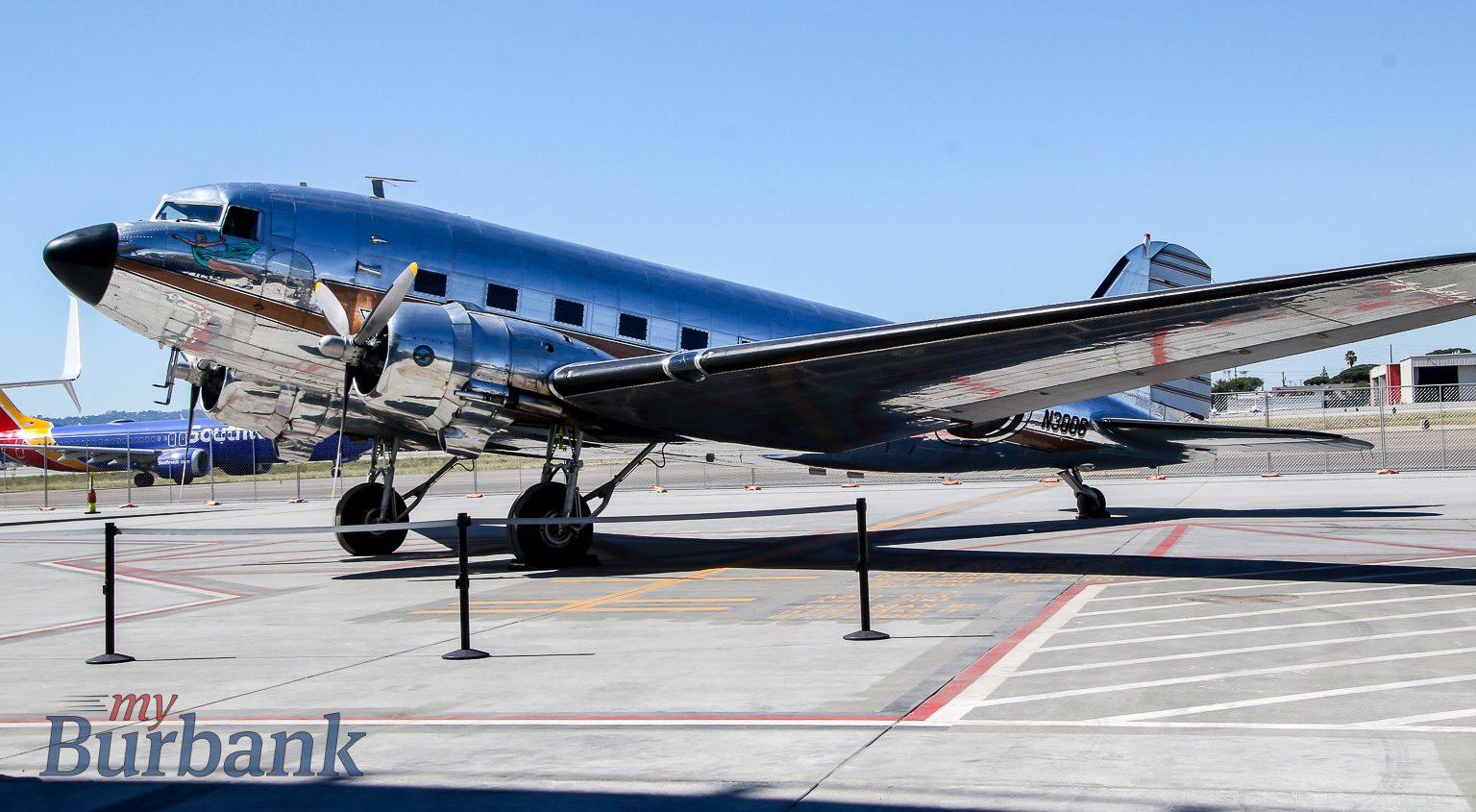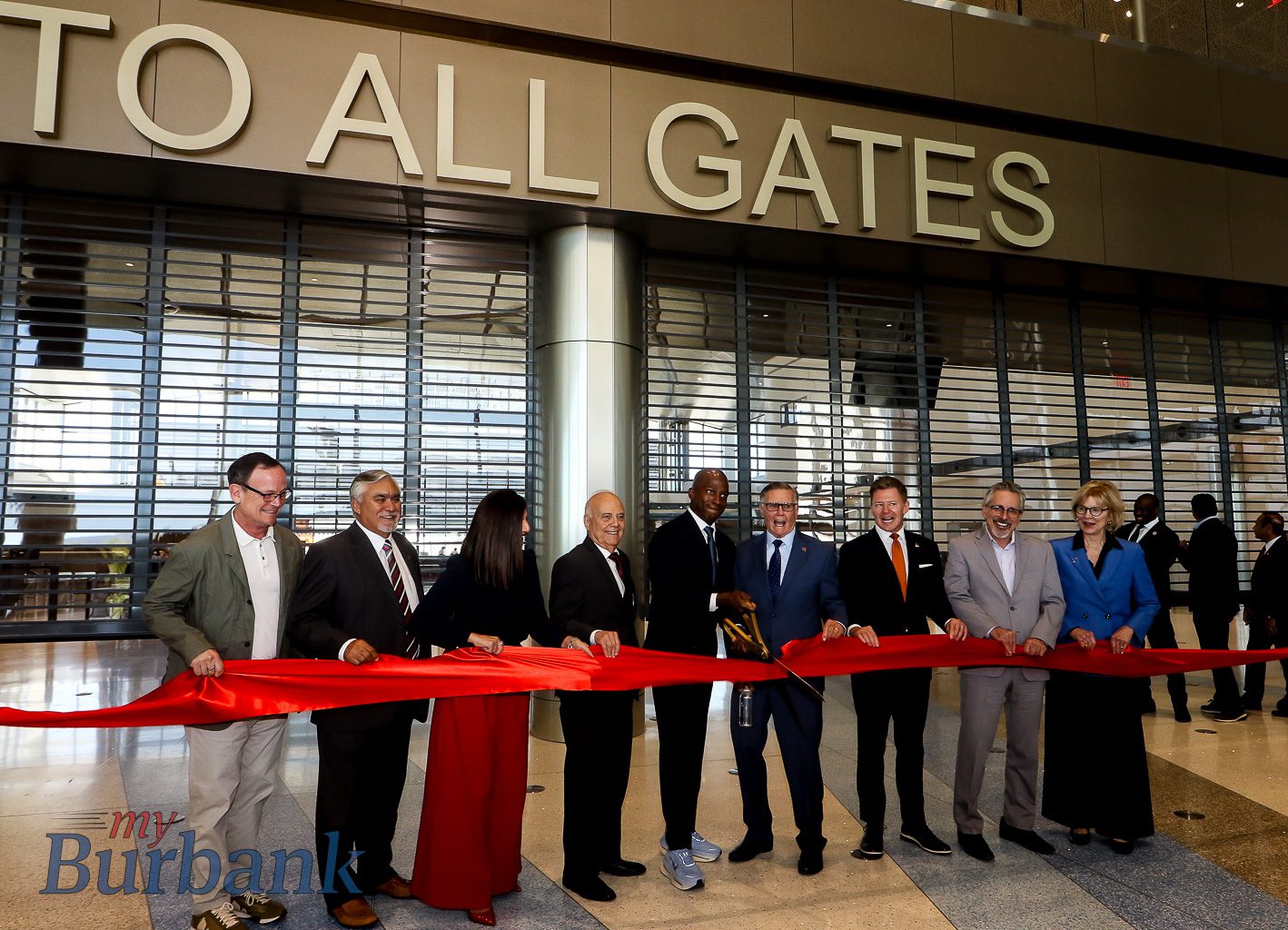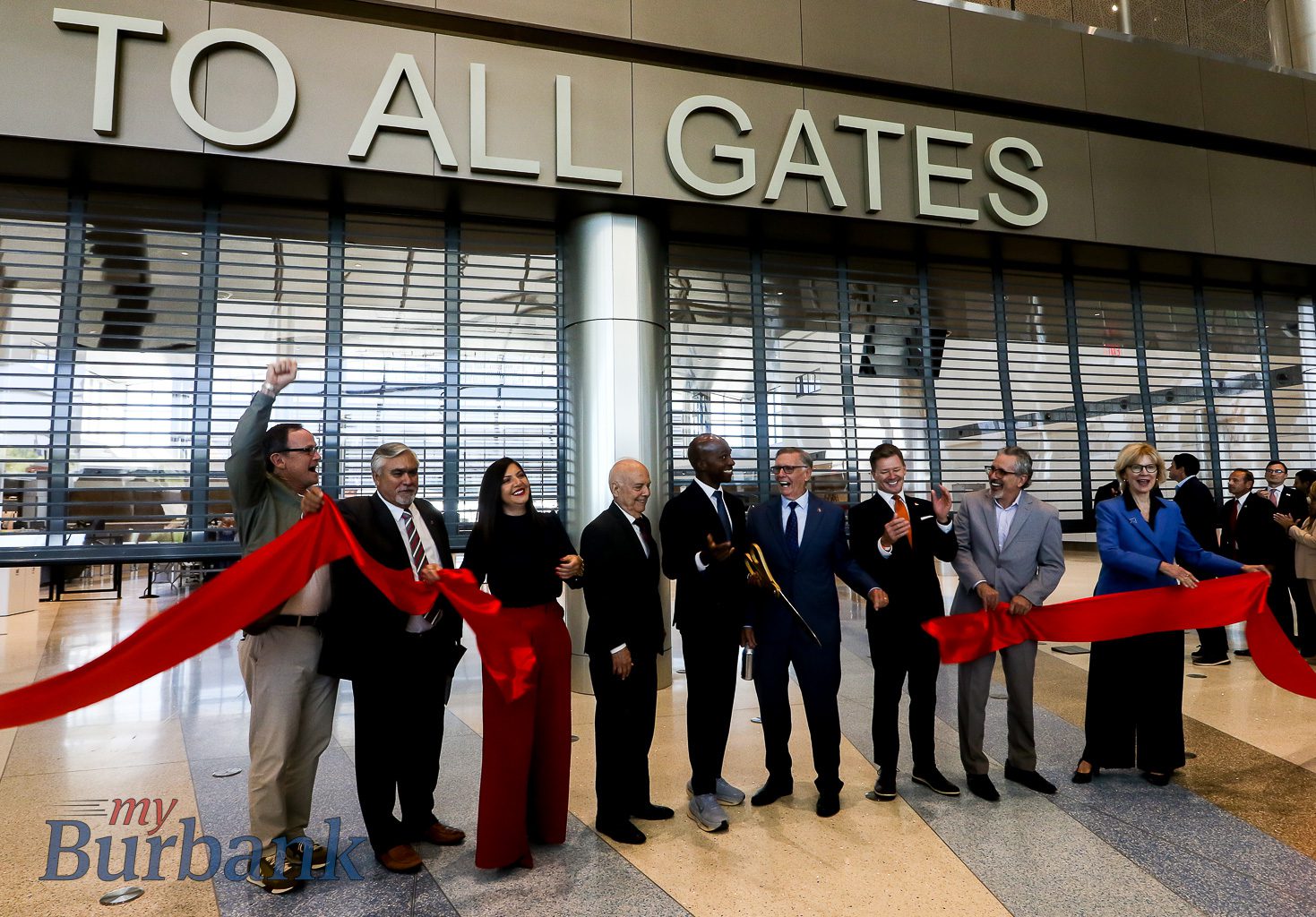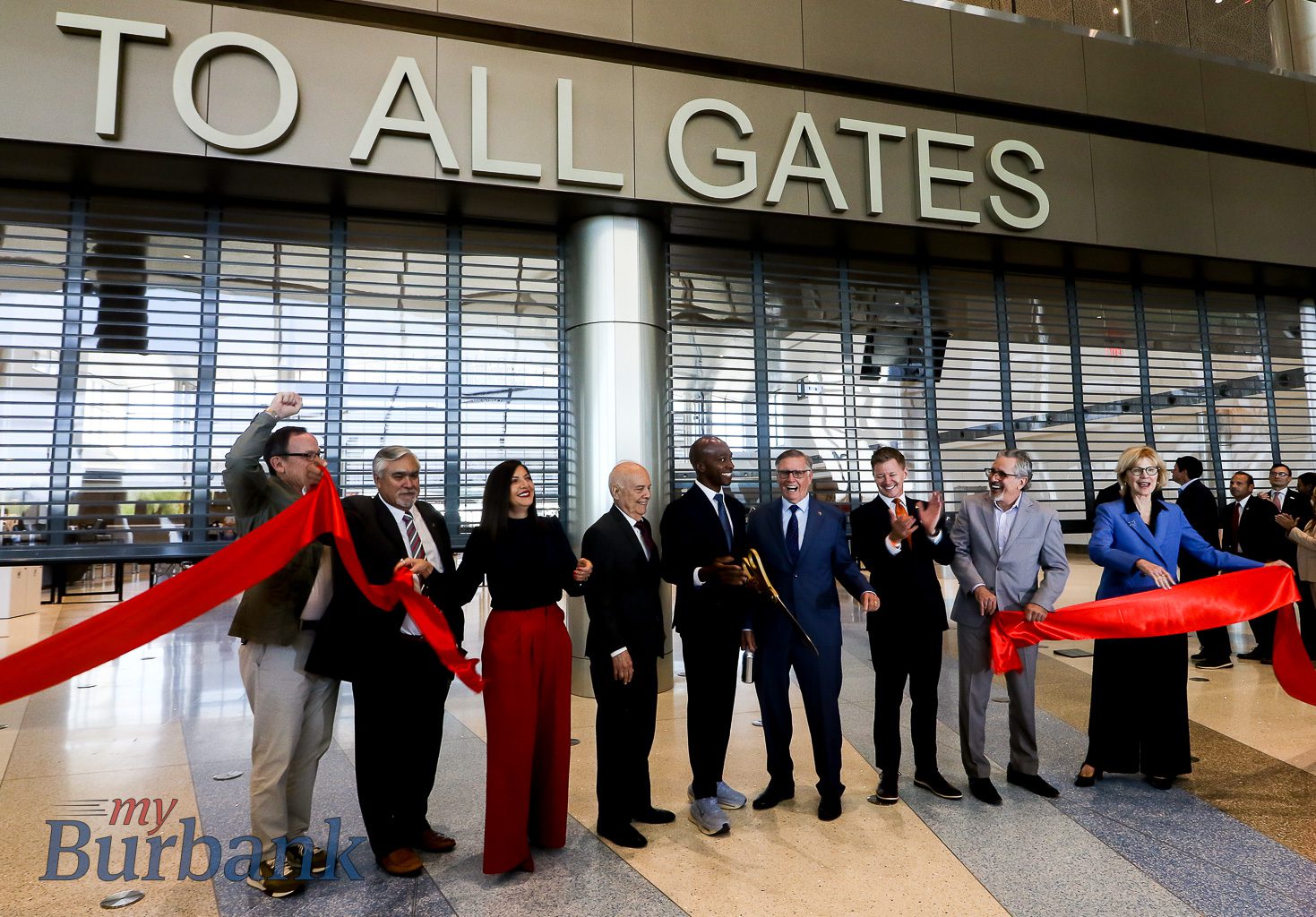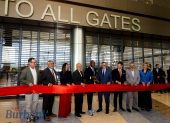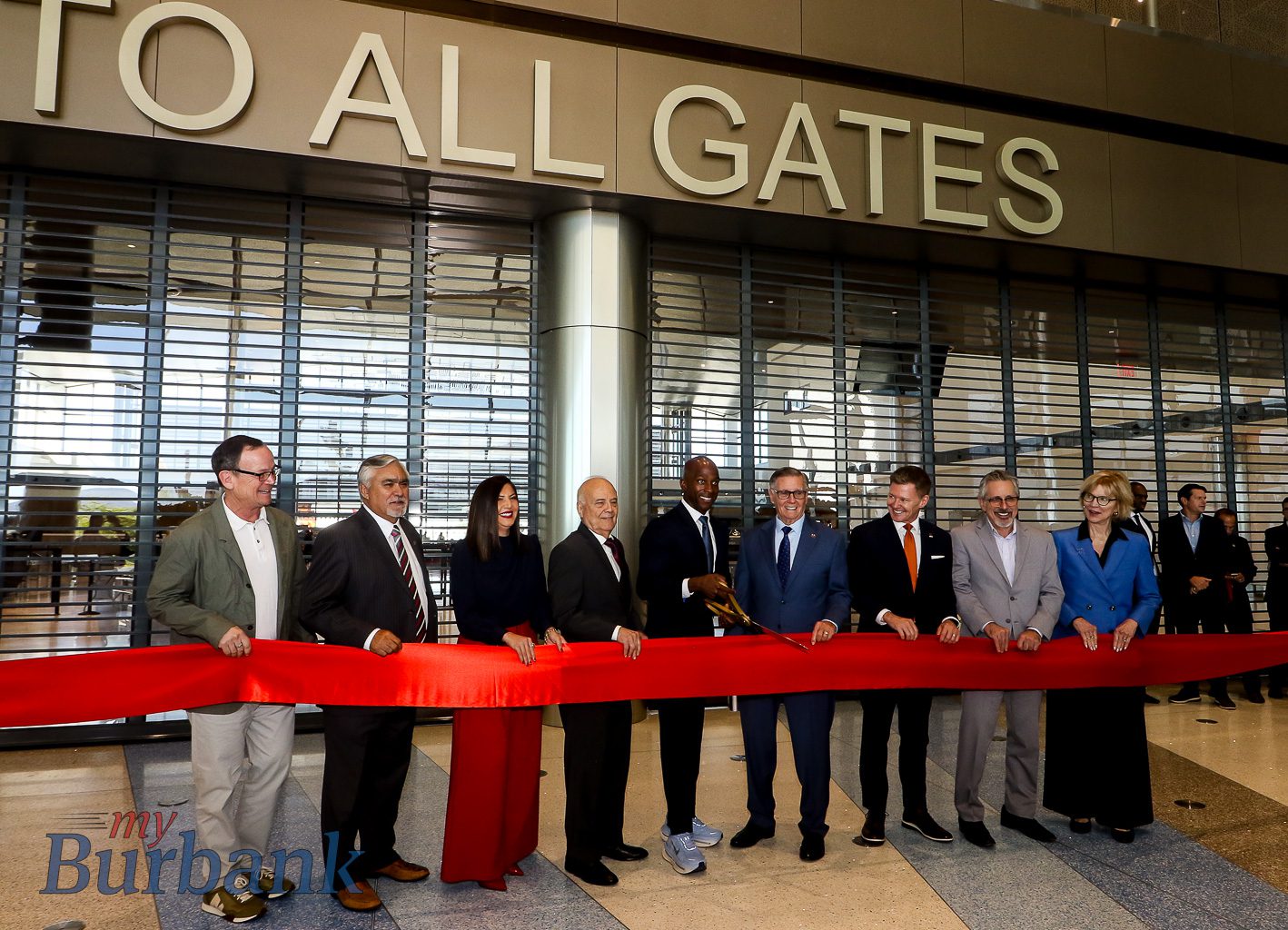
More than 1,000 people gathered Monday, October 5, for the ribbon-cutting of Hollywood Burbank Airport’s new passenger terminal, celebrating a project decades in the making and a part of Burbank history.


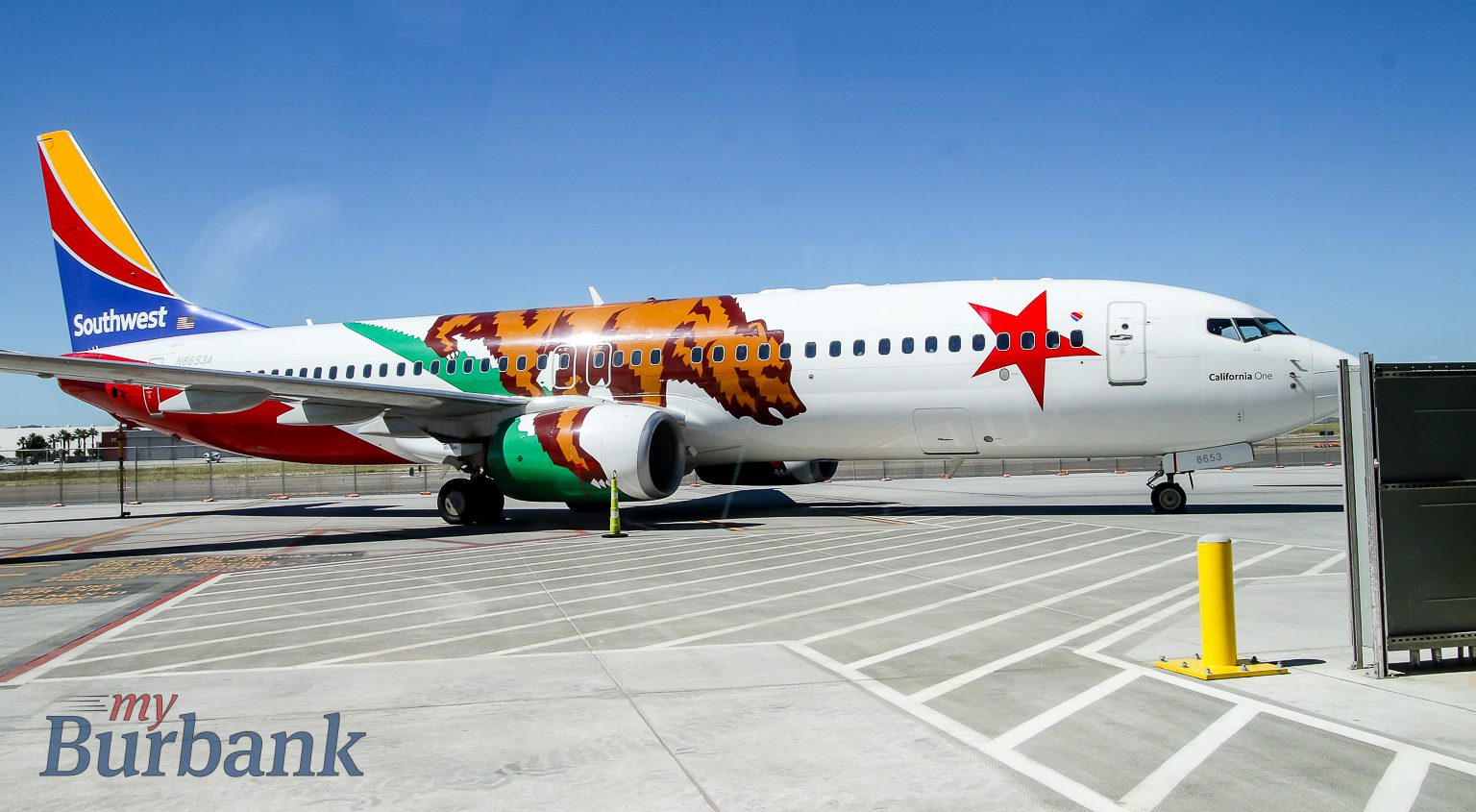
Following the ribbon-cutting and a choir performance, the gates opened to guests, who toured the terminal, walked the tarmac, and explored the shops and restaurants preparing to welcome travelers. The first flights from the new terminal are scheduled for October 13.
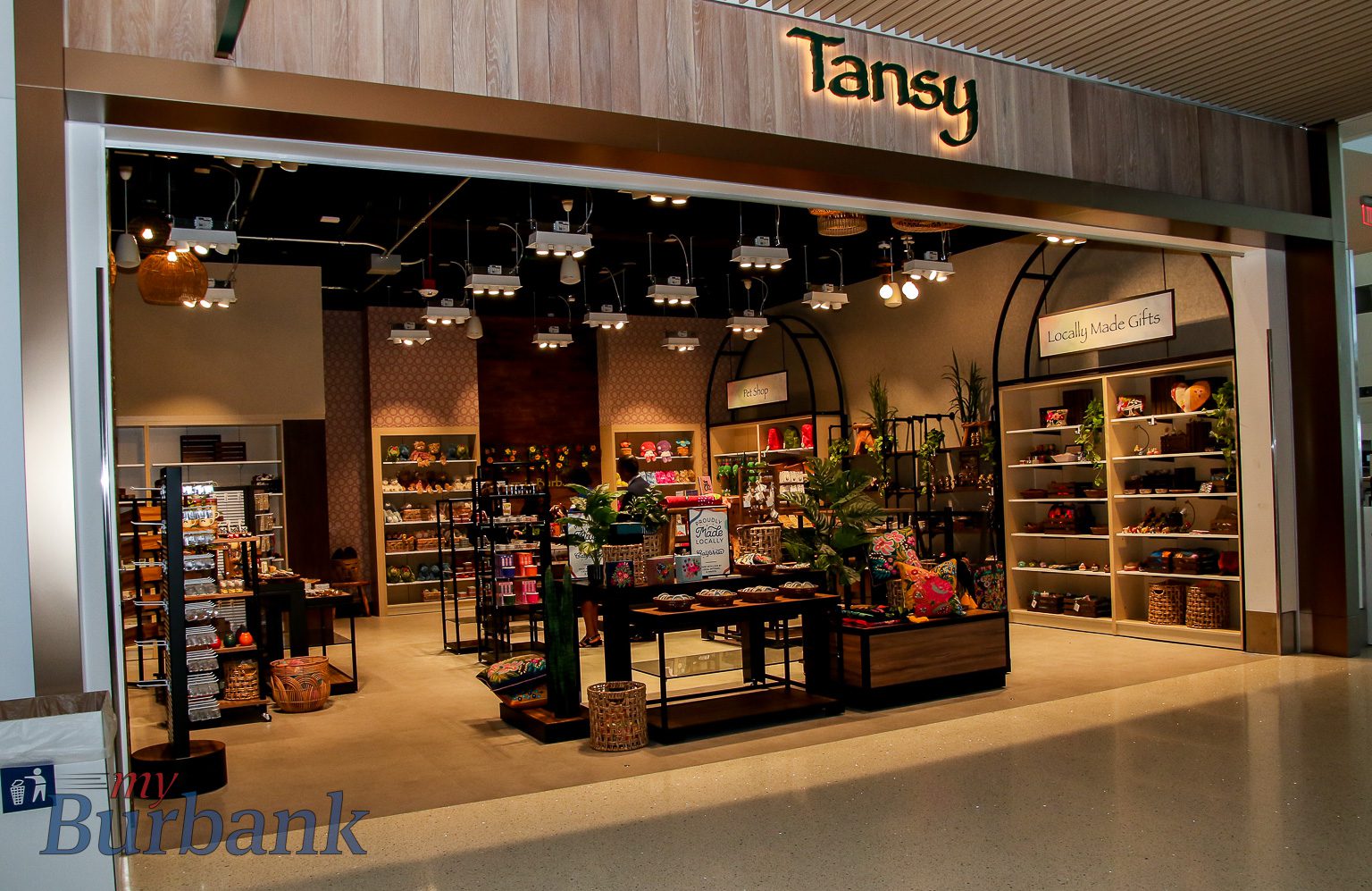
The celebration offered a preview of a more spacious airport with familiar local names, from Tansy and Poquito Mas to West Coast Smash Burger and Octavia’s Bookshelf. It also marked the delivery of a central promise to the community: a replacement terminal with the same 14 gates, designed to better accommodate today’s aircraft and passengers.
“We wanted a modern airport, but we didn’t want to lose that special touch that has always made Hollywood Burbank Airport so beautiful,” said Burbank Mayor Tamala Takahashi. “For decades, people have loved flying through Burbank because it’s convenient, efficient, and easy to navigate. “This beautiful new facility takes everything we love about the experience and brings it into the new era with modern amenities, greater accessibility, enhanced safety, and a welcoming design, all while maintaining the 14-gate airport our community knows.”
For Kevin McCarney of Poquito Mas, the airport location represents a meaningful next chapter after 34 years in Burbank. “I feel so grateful that I can’t put it in words,” McCarney said. The restaurant will make fresh tortillas from scratch every day, and travelers can watch them bubble up as they cook. “I feel honored to be a part of it.”



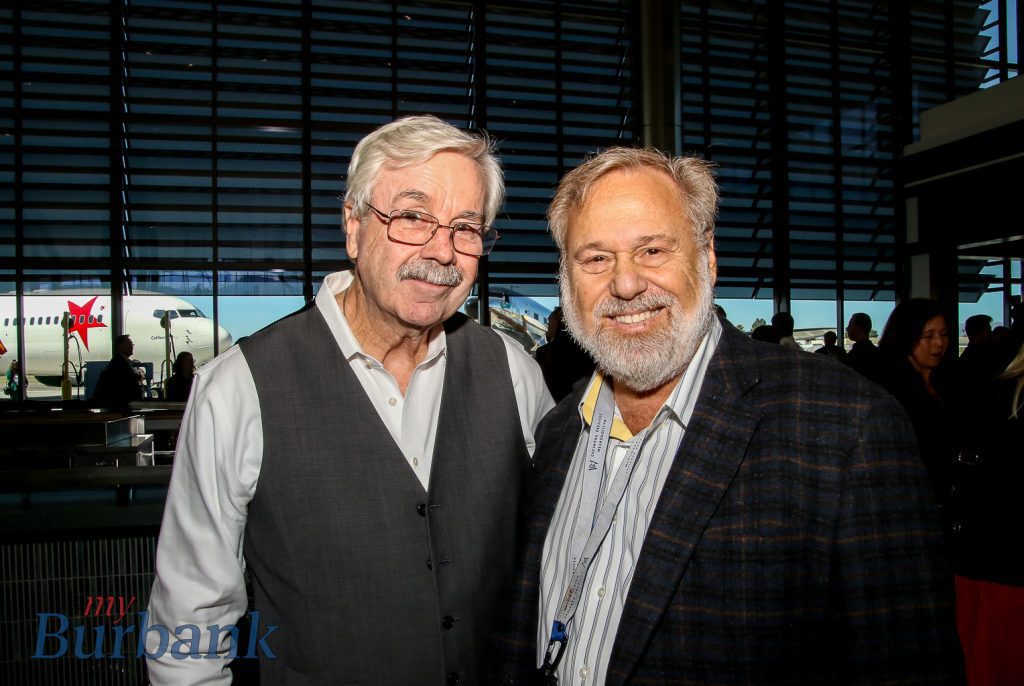
The selection of businesses reflects the communities served by the Burbank-Glendale-Pasadena Airport Authority. Steve Mora, owner of Metropolitan Culinary Services LLC operates all of the food and beverage locations at the airport and chose iconic sites that reflected each of the three cities. “When our community flies out of its community airport, they want to be proud of what they see.”
Mora also shared a personal connection to one of the new gathering places at the center of the airport, Pete’s Pubk, named after his father, a Holocaust survivor who became a beloved presence at Burbank Airport. After surviving five concentration camps and immigrating to the United States, Pete began running the airport’s barbershop in 1977, welcoming travelers, local first responders, and aviation legends such as Lockheed designer Kelly Johnson.
In 1992, he expanded into the terminal’s food and beverage concessions alongside his son, bringing that same hospitality to a new setting. Known affectionately as “The Cookie Man” for sharing jumbo homemade chocolate chip cookies around Burbank, Pete built a legacy of kindness that the pub now celebrates, giving travelers a place to gather, share a story, and enjoy one of his famous cookies.
For Mayor Takahashi, incorporating local businesses helps ensure that arriving passengers encounter something distinctly Burbank from the start. “For millions of travelers, this terminal will be their front door to Southern California, and what an incredible front door it is!” she said. “I’m especially proud that when travelers arrive here, their first experience of our region will also be an experience of Burbank. There’ll be pieces of our city represented throughout the terminal, including local businesses like Tansy and West Coast Customs, that bring the charm of our city into this amazing new space.”
Throughout the terminal, public art pays homage to Burbank’s aviation. Beyond the TSA checkpoint, travelers will encounter a piece of public art hanging above, with a much deeper meaning rooted in the region’s history.
Glenn Kaino’s suspended installation, “When We Reflect,” draws inspiration from camouflage nets made by incarcerated Japanese Americans at the Santa Anita Assembly Center during World War II, where members of his family were held. Such camouflage helped conceal wartime facilities, including the Burbank airport and nearby Lockheed operations, from potential aerial attack.
In an Instagram post explaining the work, Kaino described transforming the original materials and pattern into something with a different purpose. “I chose to transform the pattern and materials into an artwork that serves in opposition to the original, a device that reflects the people below in community,” he wrote, also describing the work as an invitation to reflect on the imprisonment of American citizens, then and now.
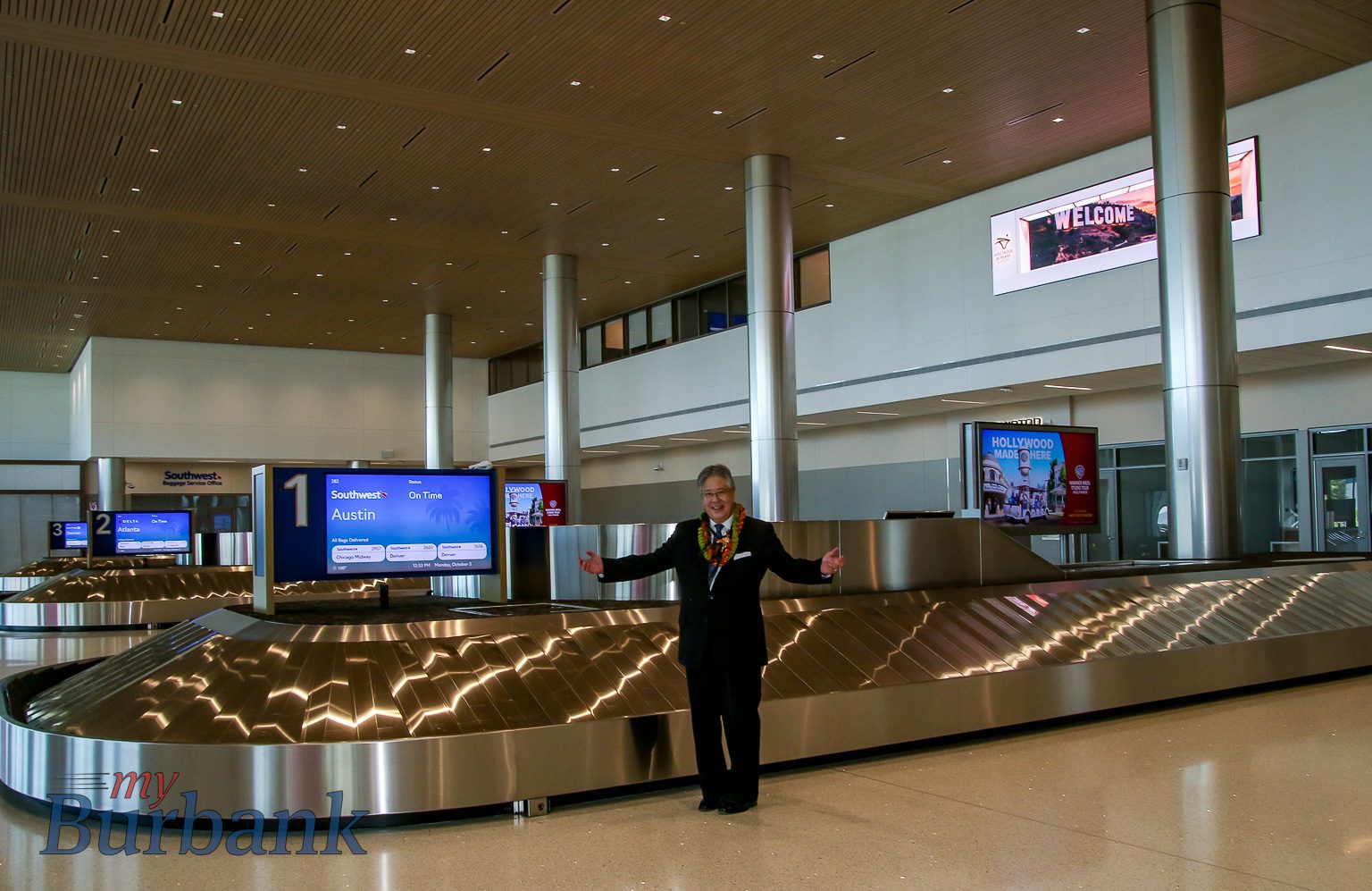
But behind the new storefronts, art installations, and updated surroundings is a practical change travelers will notice and feel when they board: the expanse of space. With more room for aircraft at the gates, the additional space lets airlines accommodate larger planes with more seats, allowing the airport to serve more passengers through the same number of gates.
Inside, the additional space also addresses familiar frustrations of flying through an aging terminal, including crowded seating areas and the need for accessible, updated facilities. Rep. Laura Friedman recalled working on the issue as an airport commissioner and educating the community about the need to replace the old, aging, non-ADA, non-seismically safe facility built almost a century ago, when Herbert Hoover was president.
“It served us well for almost a century, but we knew that we needed something that was safer and better for people,” said Friedman. “This terminal has everything. It’s got enough seating. It’s got the power ports. It is gorgeous inside and out, and it’s exactly what we need… we want to tell the whole United States it’s time to fly Burbank!”
The need for replacement went beyond comfort. The existing terminal does not meet current Federal Aviation Administration standards for separation from runways and required clear areas, and it falls short of current state building requirements. Its older design also limits how efficiently the airport can move and serve passengers. The replacement was designed to address those issues, with greater distance from the runways, compliance with current earthquake and accessibility standards, and improved passenger processing.
The path to Monday’s celebration took years of public discussion. In 2016, Burbank voters approved Measure B, an agreement between the city and the Airport Authority allowing construction of a 14-gate, 355,000-square-foot replacement terminal in the airport’s northeast quadrant.
Former Burbank Mayor Emily Gabel-Luddy, whose involvement spanned service on the Planning Commission, City Council and who now acts as Commissioner of the Hollywood Burbank Airport Joint Powers Authority described the project as the result of a community finding a way forward after decades of disagreement.
“In this day and age, when there are problems everywhere, it’s a testament to a community that we could work together to solve something that vexed the city for at least 30 years,” said Gabel-Luddy.
“This is the most exciting day I have ever experienced since I have lived in the city of Burbank…and just an honor of a lifetime to be engaged to this moment when the ribbon was cut,” added Gabel-Luddy who has been following this matter from the time she was first appointed to the planning commission 24 years ago.
Once construction began, the pace was far quicker than the long road to approval. The January 25, 2024, groundbreaking brought together more than 300 community leaders and stakeholders. By January 2025, workers were hoisting the final steel beam into place, completing the terminal’s structural steel construction. Less than three years after the groundbreaking, the terminal has reached its ribbon-cutting and remains on track to welcome passengers for its planned October 2026 opening.
Ernesto Medrano, executive secretary of the Los Angeles/Orange Counties Building and Construction Trades Council, urged attendees to recognize the people behind that progress. “This terminal is a reflection of this community,” Medrano said. “It was built by the hands of local, diverse union workers, men and women who lived right here and who woke up every morning, put on their work boots and hard hats, and helped make this vision a reality.”
Funding for Elevate BUR combines federal airport improvement and infrastructure grants, Passenger Facility Charge revenues, Airport Authority funds, and airport revenue bonds backed by airport revenues. No state, county, or local funds from Burbank, Glendale, and Pasadena are being used to pay for the project. The terminal also incorporates an all-electric design and rooftop solar panels, features highlighted during the ceremony as part of its sustainability approach.
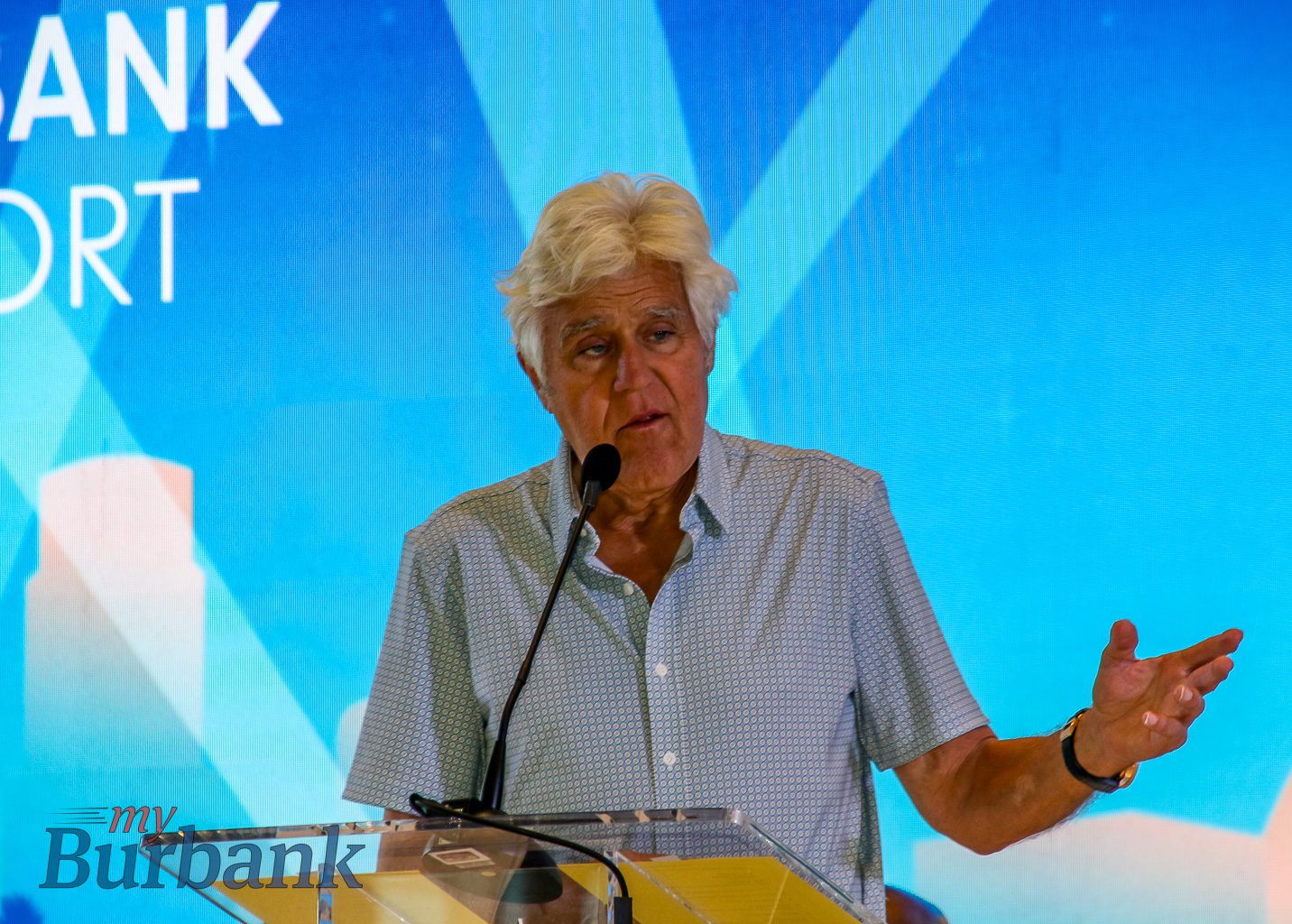
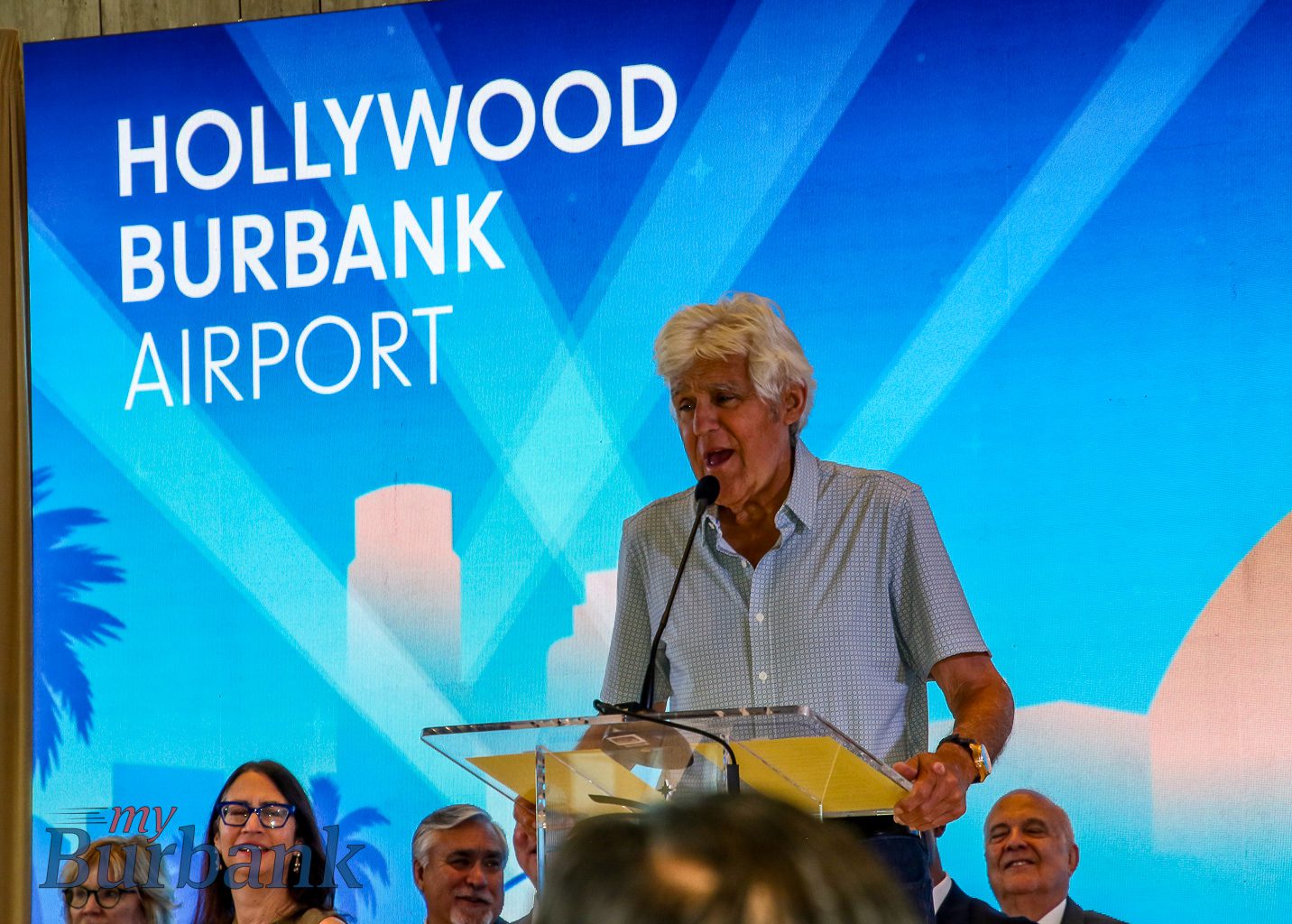
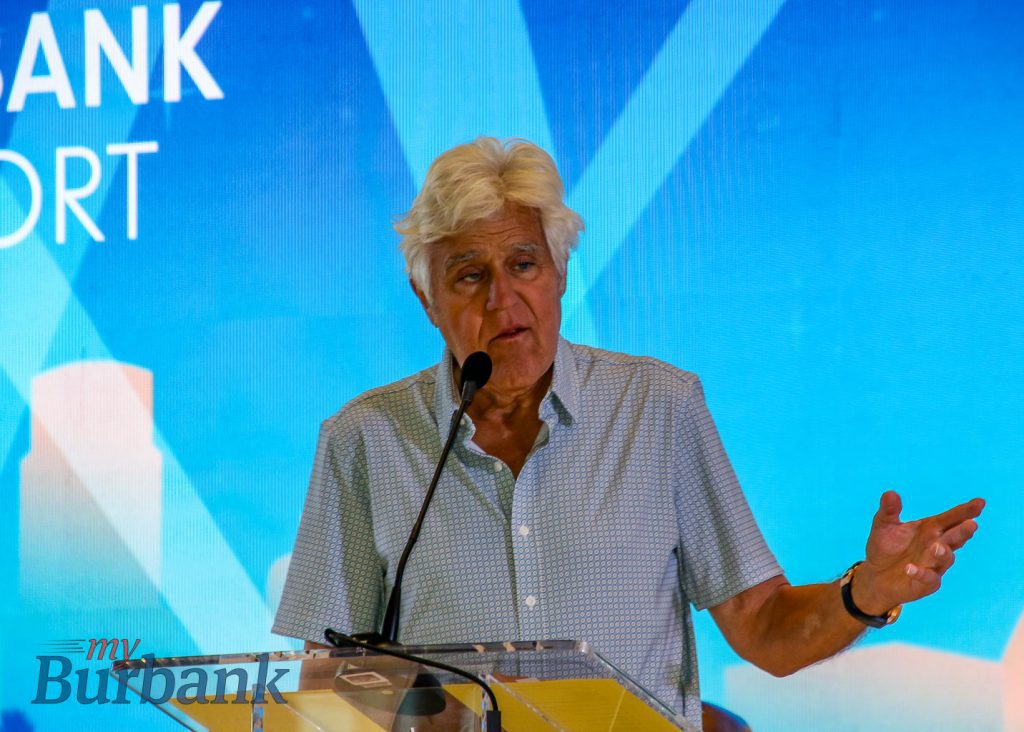
Monday’s celebration wouldn’t be complete without Burbank’s favorite celebrity, Jay Leno, whose garage sits right behind the airport. He spoke to the crowd, joking that he was glad not to have to give up his garage for the expansion. Leno praised Burbank, “we have a wonderful police chief and a police force…it’s a wonderful place to live. This is Mayberry in the middle of a crazy town,” he joked.
For Gabel-Luddy, the most important part of the transition will be carrying the airport’s culture of helpfulness into its new home. She described staff, police officers, and TSA personnel stepping in when passengers need help with luggage, directions, or a problem. “We have an 11th commandment at the airport. Thou shalt do good,” which she credits to the chief of police. “It really is about the people and the practice and the culture that’s made our old airport so welcoming,” she said.
On October 13, that welcome is scheduled to move into a new terminal, with more room for travelers and a collection of familiar businesses ready to introduce them to Burbank. So let’s get ready for takeoff!