In a pivotal step toward overhauling its electoral system, the Burbank City Council is preparing to hold a crucial public hearing on June 30, 2026. The Council is tasked with deciding the rollout sequence for a new by-district election system, a change stemming from a hard-fought legal settlement over the California Voting Rights Act (CVRA).


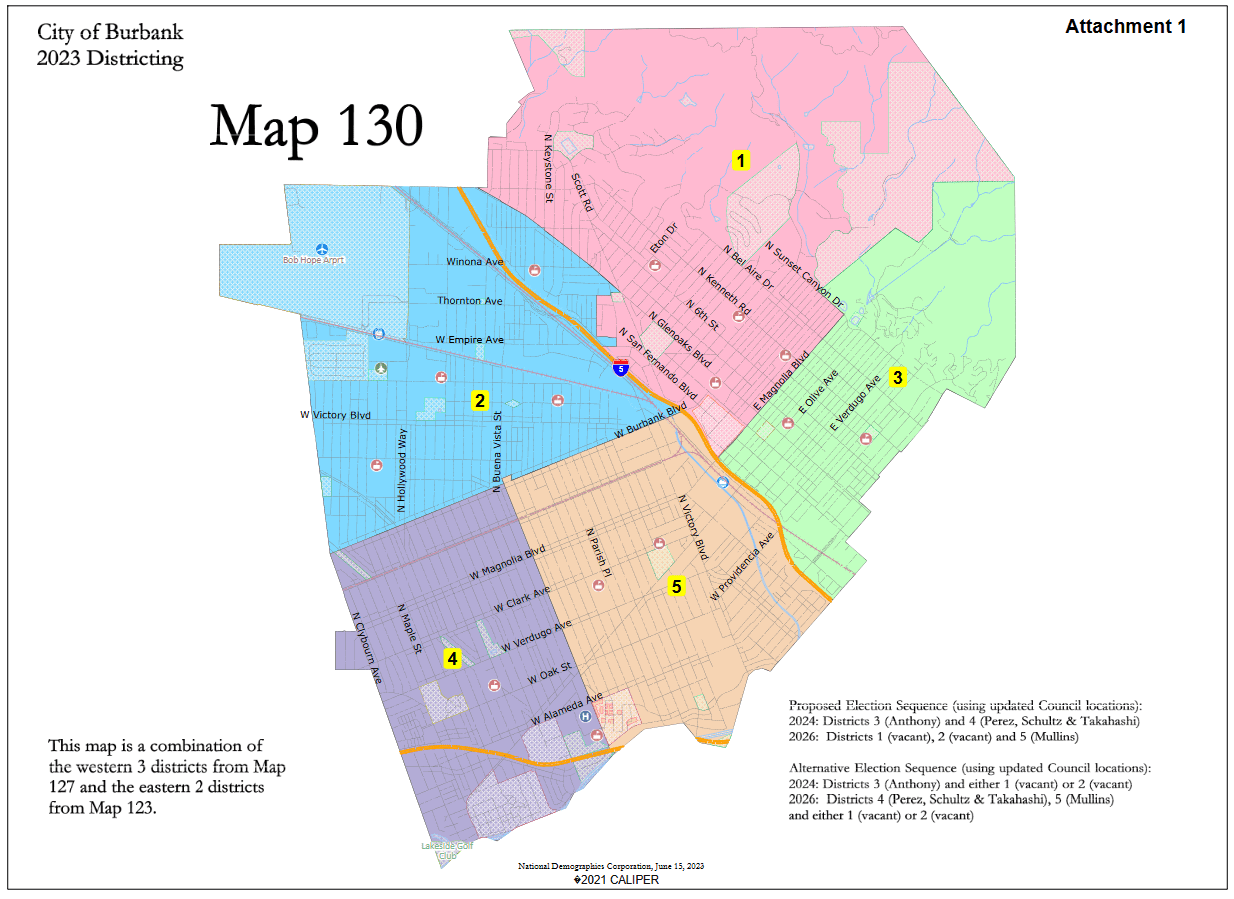
The forthcoming decision centers on “Map 130,” a five-district map drafted during a robust public engagement process in 2023. If voters approve the transition this November, Map 130 will dictate the boundaries for City Council elections starting in 2028. However, the Council must first determine exactly which of the five newly carved districts will be up for election in the 2028 presidential election cycle and which will wait until the 2030 gubernatorial cycle.
The move away from Burbank’s traditional at-large voting system began in August 2022 when the city received a notice alleging that its election methods violated the CVRA. The notice, filed on behalf of a Latino voter, argued that the at-large system diluted minority voting power.
In early 2023, the City Council initiated a transition process, hiring expert demographers and holding numerous public hearings and community forums to gather input on how to slice the city into districts. The community submitted dozens of draft maps, ultimately leading the Council to focus on “Map 130” and its variations.
Despite the momentum, the Council paused the process in the fall of 2023 to await a consequential California Supreme Court ruling regarding a similar CVRA dispute in Santa Monica. Exploring alternative remedies like “cumulative voting,” the Council temporarily declined to adopt a district map. In response, the plaintiff officially filed a lawsuit against the city in October 2023.



The legal battle formally ended in February 2026 when court-ordered mediation resulted in a settlement. Under the agreement’s terms, the city is required to place two measures on the November 3, 2026, consolidated statewide ballot: a charter amendment permitting a change in election methods, and an ordinance to officially enact Map 130.
While the settlement locked in the use of Map 130, it left the sequencing of those district elections entirely up to the discretion of the City Council. According to a recently released staff report authored by Chief Assistant City Attorney Jill Vander Borght, the Council will review four primary options during the June 30 hearing:
- Option 1: Following Incumbent Terms. This option schedules district elections based on when current council members’ terms expire. For instance, the two districts home to incumbents whose terms end in 2028 would be placed on the 2028 ballot, while the remaining districts would be voted on in 2030.
- Option 2: Diversifying Geographic Representation. This path seeks to immediately expand geographic diversity by prioritizing districts where no current council members reside, ensuring fresh voices are added to the council as early as 2028.
- Option 3: No Incumbents on the 2028 Ballot. Under this scenario, districts currently lacking a resident incumbent would be placed on the 2028 ballot, meaning incumbents whose terms expire in 2028 would have to wait until 2030 to run in their home districts (though they would complete their at-large terms).
- Option 4: A Clean Slate in 2028. The most sweeping option would place all five districts on the November 2028 ballot simultaneously. To maintain staggered council terms moving forward, the top three vote-getters would be awarded four-year terms, while the remaining two would receive initial two-year terms before reverting to standard four-year cycles.
In making their decision, the Council is legally required to consider the core purposes of the CVRA and take into account the preferences expressed by residents living within the proposed districts.
Following Tuesday’s public hearing, the Council is expected to adopt a resolution officially setting the election sequence. City staff will then integrate this sequence into the final ordinance. However, the ultimate fate of Burbank’s electoral future rests in the hands of the public. Voters must approve both the charter amendment and the Map 130 ordinance at the ballot box this November for the transition to district elections to become a reality.