A 60-year journey through Hollywood, creativity, and the enduring spirit of a lifelong performer



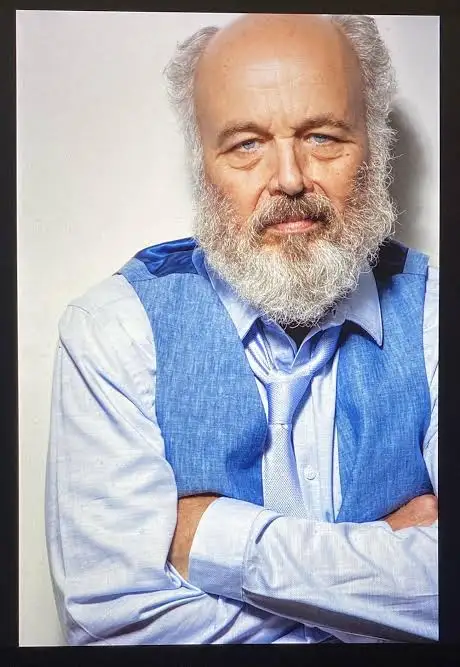
For most people, a career in entertainment is a journey. For Clint Howard, it has simply been life itself.
At 67 years old, with more than six decades in the business, Howard’s story is not one of arrival, but of continuity. Born into a family of performers and raised in Burbank, California, he didn’t choose acting so much as grow into it—organically, instinctively, and with a craftsman’s discipline that has sustained him through an ever-changing industry.
“I’ve never known myself as not being an actor,” he says.



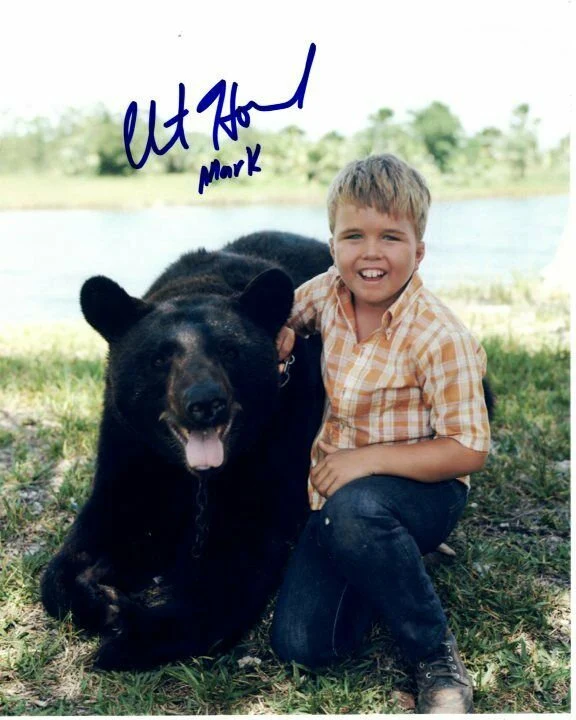
Howard’s earliest memories are inseparable from the camera. By the time he was two years old, he was already performing, and by five, acting was simply part of his identity. His parents, both actors, helped guide him, instilling both confidence and a sense of responsibility.
That sense of responsibility has shaped his philosophy. While many describe acting as art, Howard often frames it as a job—a craft that requires discipline and reliability.
“I give them my Social Security number,” he jokes. “Because I expect a paycheck.”
It’s a humorous line, but it reflects a grounded perspective that has kept him steady in an industry known for instability.
Behind the longevity of Howard’s career lies a reality many overlook: rejection. Even as a child, he faced it regularly.
“I’d go on five or six auditions to get one role,” he recalls.
That pattern—frequent rejection paired with occasional success—is part of the rhythm of acting. It’s something Howard learned early and continues to share with younger performers, including his daughter.
Show business, he emphasizes, is not easy. But it is expansive. For those willing to explore, there are countless roles beyond acting—costume design, set design, writing, producing—each offering its own creative fulfillment.
“You might start as an actor,” he says, “but you could end up doing something else entirely.”
This openness to possibility has defined Howard’s career. Over the years, he has explored writing, producing, and collaborating on creative projects, including a film he is currently developing with his wife.
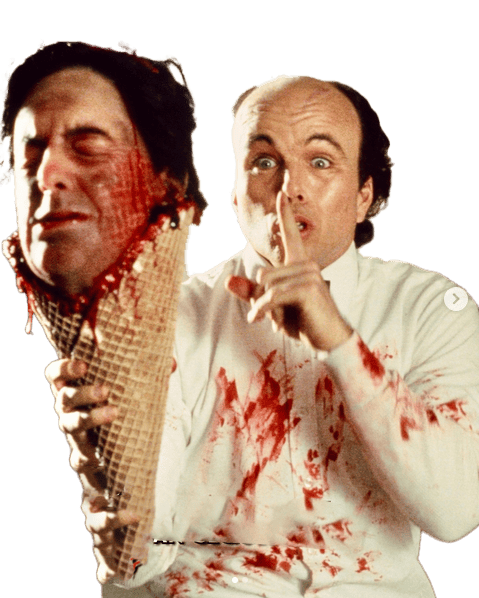
“Another Ice Cream Man” is not necessarily a sequel to his original “The Ice Cream Man” he made in the 1990’s, which, coincidentally will be screening at the Burbank International Film Festival on August 7th. – https://shorturl.at/6SM5l
“It’s business,” he says. “But it’s creative business.”
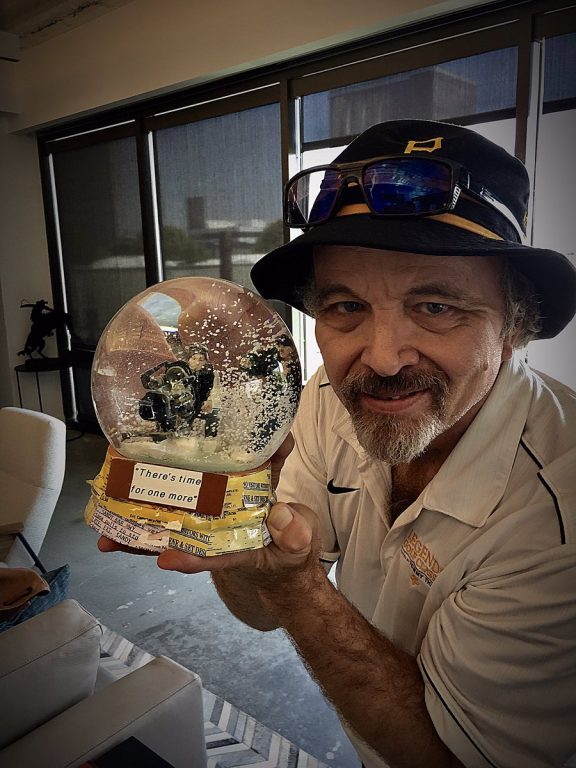
Off-screen, Howard’s creativity takes unexpected forms. One of the most unique is his series of handcrafted snow globes—miniature worlds built from found objects and imagination.
What began as a simple experiment grew into a personal art form. Each snow globe tells a story, often with a humorous or subversive twist.
“They’re like a panel from a comic book,” he explains.
Broken figurines become new narratives. Familiar scenes are reimagined with dark humor and inventive detail. The process is entirely intuitive—ideas come organically, and if they don’t resonate, they’re abandoned.
“It has to be my idea,” he says. “Otherwise, it’s not interesting.”
This commitment to authenticity runs through all of his work.
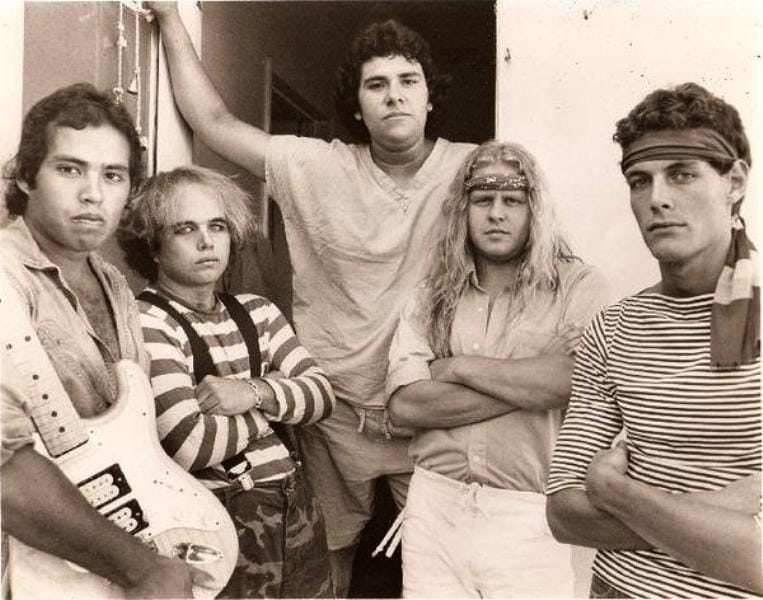
In the early 1980s, Howard explored music, forming a band and performing throughout Southern California. Influenced by artists like David Bowie and Lou Reed, the group embraced an experimental, expressive style.
“We weren’t trying to write hits,” he says. “We were writing what we liked.”
The experience was creative and chaotic, filled with the highs and lows of life on stage. Eventually, the music faded into the background—but never disappeared entirely.
Today, Howard continues to evolve creatively, supported by his wife, Kat, who plays multiple roles in his life—partner, collaborator, and honest critic.

“She’s my mirror,” he says.
Their relationship is built on mutual respect and creative exchange. Together, they are working on new projects, including film production and future artistic ventures.
For Howard, creativity is not confined to one medium. It’s a way of thinking, a way of engaging with the world.
At the center of it all is Burbank—a city that has shaped his life in countless ways.
“I love Burbank,” he says. “There’s magic in the air.”
It’s a place where entertainment history and everyday life intersect. From its studios to its neighborhoods, Burbank offers a unique blend of creativity and community.
Howard speaks of its parks, schools, and first responders with genuine appreciation. He recalls moments when the city’s infrastructure and sense of community made a real difference in his life.
“You can’t be bored in Burbank,” he says.
After decades in the same city, his connection to it remains strong. It’s not just where he lives—it’s where his story has unfolded.
At 67, Howard shows no signs of slowing down. He continues to act, create, and explore new ideas, driven by a desire to stay engaged and curious.
“I’ve got a couple decades left,” he says.
There is a quiet confidence in that statement—a recognition of both time and possibility.
Howard’s career is not defined by a single breakthrough or identity. Instead, it is shaped by consistency, adaptability, and a deep respect for the craft.
In an industry often focused on fame, his story is a reminder that longevity comes from something deeper: showing up, doing the work, and staying true to yourself.
And in that sense, Clint Howard’s life may be the purest form of artistry—one built not on spotlight alone, but on dedication, resilience, and an enduring love for the work.
Yet despite a lifelong career in Hollywood, Howard doesn’t romanticize the craft. He calls himself a craftsman—a professional who shows up, does the job, and delivers.
That grounded perspective has kept him steady in an industry known for its volatility. But creativity, for Howard, doesn’t end when the cameras stop rolling. It simply changes form.
After stepping away from golf due to health issues, Howard found himself searching for a new creative outlet. That search led him to something unexpected: do-it-yourself snow globe kits.
What began as a simple experiment quickly evolved into a deeply personal art form.
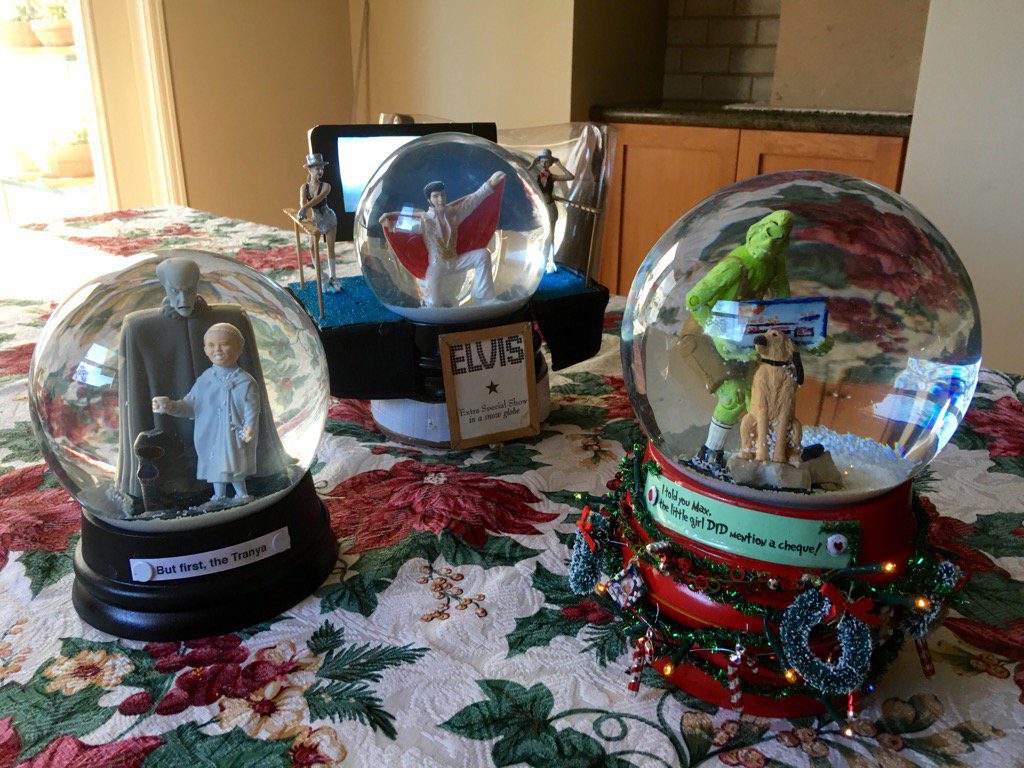
Each snow globe starts with an idea—often humorous, sometimes dark, always uniquely his. Using figurines, found objects, and a willingness to break and rebuild materials, Howard constructs miniature scenes that feel like frozen moments from an unseen story.
One early piece, inspired by a holiday classic, arrived damaged. Instead of discarding it, Howard reimagined it. A broken figurine became the centerpiece of a new narrative—one that was funnier, stranger, and more memorable than the original.
That instinct—to transform imperfection into creativity—defines his work.
Howard describes his snow globes as “like a panel from a comic book.” Each one captures a single moment, a visual punchline, or a narrative twist. There is no beginning or end—just a perfectly timed scene suspended in artificial snow.
Some are playful. Others lean into dark humor. One features a mob-style figure at the bottom of the globe, surrounded by fish—a literal interpretation of “sleeping with the fishes.” Another reimagines familiar characters in unexpected ways, turning nostalgia into something entirely new.
What unites them all is their originality.
Howard does not take commissions. He does not follow suggestions. Each piece must originate from his own imagination.
“If it’s not my idea, it’s not interesting,” he says.
Unlike mass-produced collectibles, these snow globes are imperfect. Some leak. Some break. Some change over time.
“They’re living things,” Howard has said.
That imperfection is part of their charm. They are not meant to last forever—they are meant to exist, fully and creatively, in the moment.
In many ways, the snow globes mirror Howard’s career. Both are built on timing, intuition, and a willingness to adapt. Both capture fleeting moments and give them form.
And both are rooted in storytelling.
Decades in the entertainment industry have shaped Howard’s creative instincts. Even in miniature form, his work reflects a deep understanding of narrative structure. Each globe is carefully composed, with every element serving a purpose.
The scale may be small, but the storytelling is not.
Howard’s wife, Kat, sees his work through a different lens. To her, everything he creates—whether on screen or in his workshop—is art.
She first encountered his snow globes before fully understanding his acting career, and it was those pieces that revealed the depth of his creativity.
They are intricate, emotional, humorous, and often surprising.
They are also entirely his own.
In a profession defined by collaboration, the snow globes represent something rare: complete creative control.
There are no directors, no producers, no audience expectations—only instinct and imagination.
That freedom allows Howard to explore ideas that might not fit within traditional storytelling formats. It’s a space where he can experiment, take risks, and follow his curiosity without limitation.
And yet, his connection to Burbank remains central.
After nearly a lifetime in the city, Howard describes it as a place with a kind of quiet magic. It’s a community where creativity is both a profession and a way of life.
From major studios to neighborhood parks, Burbank offers a unique blend of industry and intimacy—a place where storytelling feels both grand and personal.
Howard’s snow globes fit perfectly within that landscape.
They are small, self-contained stories, tucked away in a garage, waiting to be discovered.
Although he hasn’t created one in some time due to supply limitations, the ideas continue to come. He is already planning a return to the craft, incorporating new techniques and technologies while maintaining the handmade spirit that defines his work.
For an upcoming celebration, he plans to create custom snow globes featuring miniature versions of himself and his wife—another example of how his creativity continues to evolve.
At 67, Howard remains active in both his professional and personal creative pursuits. He continues to act, produce, and explore new ideas, driven by a desire to stay engaged and curious.
But it is in these small glass worlds that something particularly meaningful emerges.
They are not performances.
They are not roles.
They are moments of pure creation—humorous, strange, imperfect, and entirely authentic.
And in a career defined by collaboration, they may be the truest expression of who Clint Howard is.
A craftsman.
A storyteller.
And, perhaps, an artist after all.