Early History of Burbank
In 1908, Burbank had a population of about 300, but its new bank received $30,000 in deposits on opening day. A few years later, motorcycle police were catching speeders on San Fernando Road, and by 1926, a crowd had gathered outside a local radio shop to follow the World Series. Newspaper accounts and historical photographs capture these and other details of Burbank’s early development.


Opening of the Bank
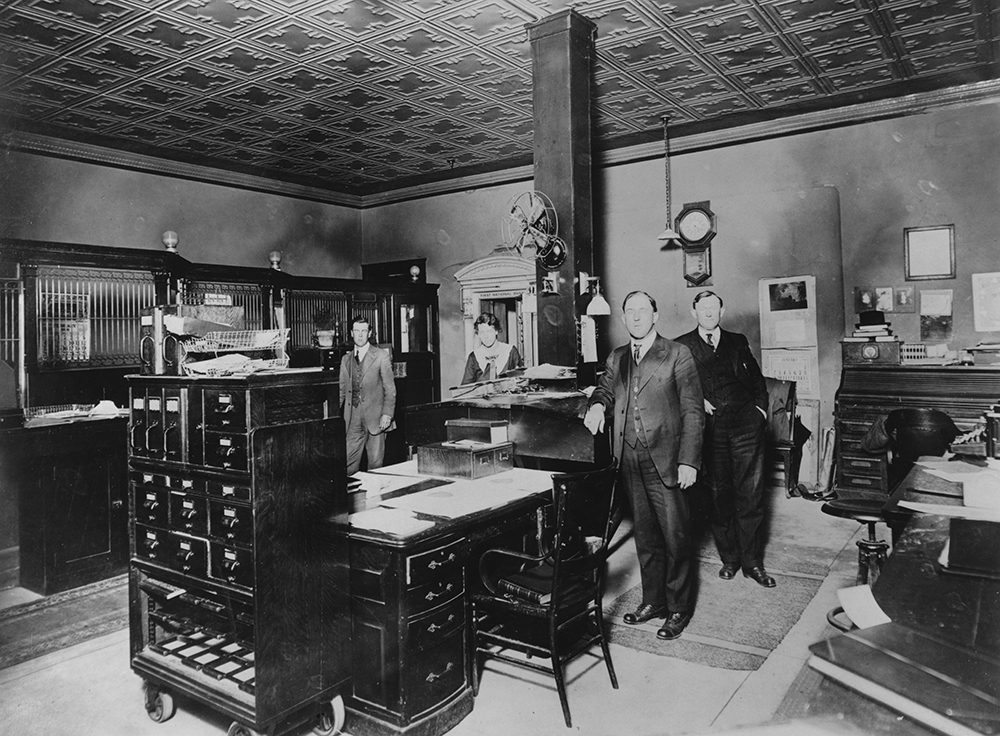
Burbank State Bank opened on April 1, 1908, when the town had about 300 residents. Despite its small population, the bank received $30,000 in deposits on its first day, according to Financing an Empire, a 1927 publication on California banking history.
Henry Arthur Church and Ralph Owen Church organized the bank with $25,000 in capital. Located near the corner of Olive Avenue and San Fernando Road, it changed its name to First National Bank in 1911. The photograph in the Burbank Public Library’s historical collection shows the bank at that location in 1912. This image was taken from within the cashier’s cage. This image came from a collection of images donated by the Delores Palmer Estate. She was a BUSD employee for many years and authored the book “A History of Burbank.”
Improving Services
As Burbank grew, the town began making changes to its public services. Regular garbage collection started in 1920, and outhouses were banned in 1922.
Traffic enforcement also made the news. On April 3, 1911, the Los Angeles Times reported that motorcycle police had caught motorists speeding on San Fernando Road near Burbank. The newspaper noted that the smooth road and open countryside tempted drivers to go faster. Officers spent several hours catching motorists who exceeded the 15-mile-per-hour speed limit.



More Local Businesses Arriving
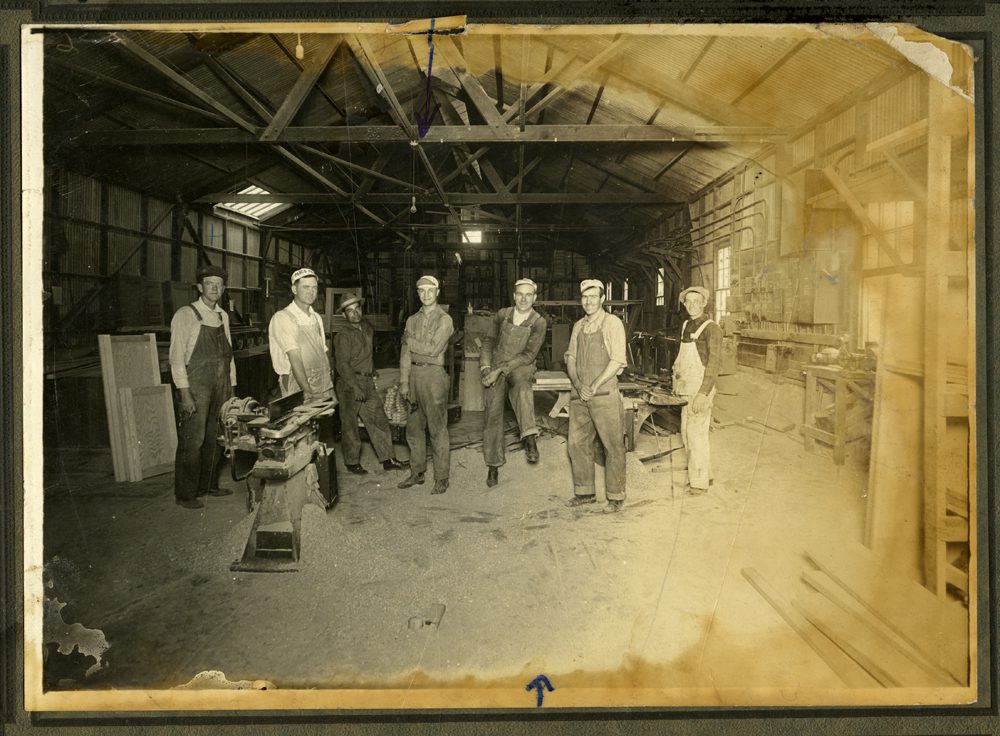
The 1924 photograph above shows the Burbank Planing Mill at the corner of Olive Avenue and Front Street. The Burbank Public Library’s historical collection identifies three men in the image: Claude Newman, at the far left; Lawrence McDowell, in the center; and Wil Bean, third from the right. The photograph offers a glimpse of the people and businesses that were part of the growing town.
Two years later, a crowd gathered outside Collins’ Radio Shop at 223 S. San Fernando Boulevard to follow the 1926 World Series. The gathering shows how a local business became a meeting place for residents eager to hear the latest sporting news over the radio.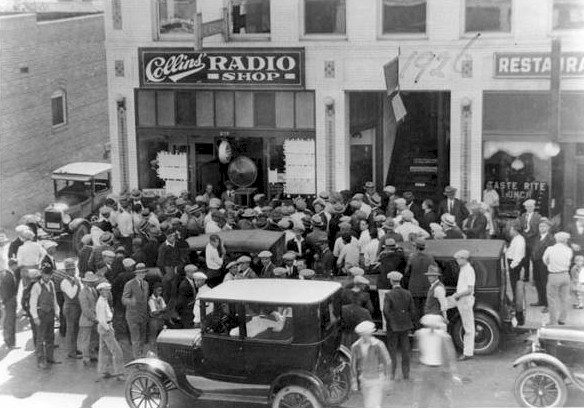
Address: 223 S. San Fernando Blvd., Burbank. Photo and caption info courtesy of Burbank Public Library, Burbank in Focus Office
Together, these records offer a snapshot of Burbank’s early development, from the opening of its first bank to the growth of public services, traffic enforcement, and local businesses.
Do you recall any other details about Burbank’s early history?