By Rick Assad



Louie Binda has led an entirely interesting life and is now fully retired and rooting for the Angels, his favorite Major League Baseball team, while enjoying the fruits of his labor.
Binda has worked for the Internal Revenue Service beginning in December 1969 and has coached for multiple decades, working with the girls’ soccer and softball teams at Burroughs High.
If that wasn’t enough, Binda, a longtime Burbank resident was also a longtime teacher and was a successful Parks and Recreation men’s fastpitch softball coach and also coached softball, baseball, AYSO soccer and club soccer.
“I became a coach in September of 1969 [Parks and Rec]. My late wife and I had just been asked to become high school youth counselors for our church youth group. The coach of our men’s church basketball team had been drafted (Vietnam) and we had no coach,” he explained. “In addition, the youth group had six boys, along with some older adults, who also wanted to play. We had too many players, so we made two teams. Most of the guys on the men’s team were better than I was so I played with the youth (B) team and coached both teams.”



Binda, who graduated from Valley State College, now Cal State University Northridge with a degree in Business Administration and an option in accounting, added: “It was hard to coach guys on the men’s (A) team that I had known and played with for years, but the guys were pretty good about it,” he said. “I must have done something right because both teams won their division. Prior to this I had never even considered becoming a coach.”
Binda, who began teaching in the Burbank Adult School in 1972 and ended that portion of his career in 1990, referenced a turning point in his coaching career.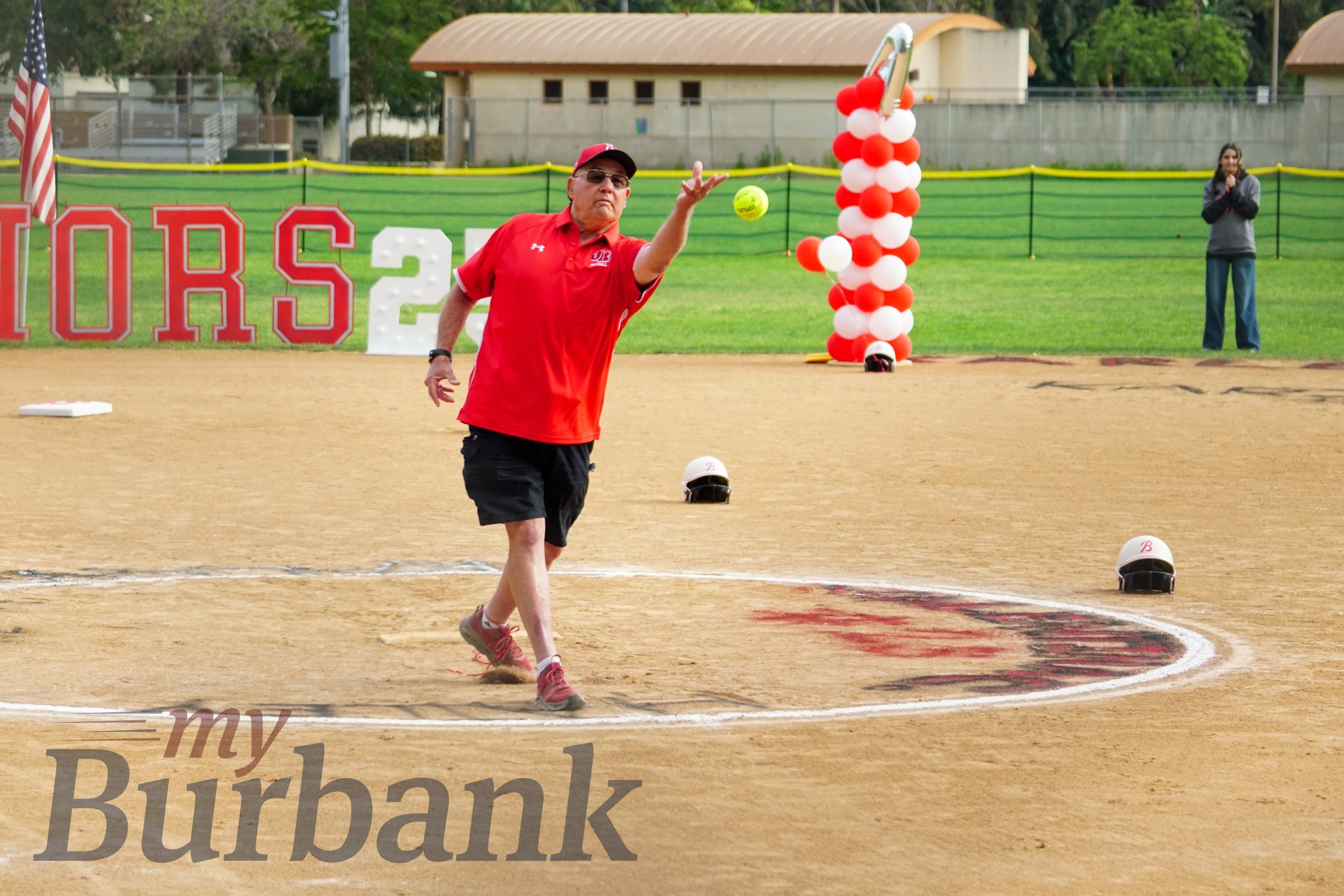
“In 2008, I was ordered to take over the girls’ soccer team just past the middle of the season. I did not want the job because I felt the coach (who I knew) should not have been fired. At that time I was coaching the boys’ freshman team, and I did not want to give that up,” he recalled. “I later found out that the team was in sixth place (out of eight teams), had lost their first game in the second round, and had their two best players out for the rest of the league season. The team had not been to the playoffs in 15 years and had never won a playoff game.”
Binda, who began his tenure as a substitute teacher in 2006 after retiring from the IRS, added: “I got the team to finish in fourth place, qualifying for the playoffs, and we won our first playoff game before we were eliminated. In 2011, I coached the girls’ junior varsity softball team to a 20-0 record. When I was given the team, the varsity coach told me that we would be lucky to win one game that year,” he noted. “We beat three teams that year giving them their only loss. Burbank High had only two losses, both to us, and we beat both of their varsity pitchers. Quite an accomplishment for a team that wasn’t supposed to win a game.”
Being on the field and seeing players improve has been rewarding for Binda, who assisted Mike Kodama as the Burroughs boys’ varsity soccer coach beginning in 1995 and later helped out the freshmen and junior varsity squads and was head coach Brady Riggs’ assistant for the girls’ varsity until 2024.
“I enjoy working with the players, the administrative staff at Burroughs, and 99 percent of the parents are terrific to work with,” he said. “I especially enjoy watching the players work hard to get better, work as a team and then see the results on the field. I love watching the players improve and seeing their confidence soar as they see their hard work pay off.”
Coaches and players need to be resilient and willing to listen to each other, according to Binda.
“Players learn that when you fail you have to get right back up and work harder,” he said. “That by working together as a team, you can accomplish so much more than you ever could as an individual. This applies to the field, the classroom, and especially in life.”
Binda, who was the first-ever Burroughs girls’ soccer coach in 1989, wanted to win just as much as the next guy, but he also wanted players to enjoy what they were doing.
“My philosophy for both are the same – make the students/players winners in life. So many of the lessons we teach and learn on the athletic field apply to what we do in the classroom and in life,” he said. “Work hard to get better. If you make a mistake, learn from it and correct it. When you get knocked down, and you will, get up and work harder.”
Athletes are the same regardless of the year or time, noted Binda.
“The athletes are similar, but the students who are not out for sports are quite different. For instance, before the Internet, all the kids could play baseball, football, and basketball in elementary school. Now, physical education teachers are teaching students how to play these sports in high school,” he said. “In 1961 when I tried out for the “B” football team we had 120 kids try out, and the school had a student body of approximately 1,200 students. Now with a student body of more than double the 2,400 students (2,600-2,800), the varsity football team gets less than half of 120 students trying out, and there is no “B” football. In the end, kids are kids, and I really enjoyed working with them in both the classroom and on the field.”
Binda’s coaching philosophy is sound and proven.
“I feel that patience and good communication skills are critical. Listen to what your players tell you. Communication is a two-way street. Game knowledge is important but not as important as patience and communication skills,” he explained. “You need the respect of your players to be successful, and respect is earned. Every coach has their own way of doing things, so I feel that there is no one way to do things. Be honest with your players. Don’t try to be something you are not.”
UCLA’s John Wooden built a dynasty on the Westwood campus as his basketball teams won 10 NCAA championships in 12 seasons beginning in 1964 and running through 1975 and the Indiana native was quick to note that coaching and teaching are one and the same.
“I totally agree with John Wooden. When I was recruited to become a manager with the Treasury Department the primary reason was because I was already a successful instructor with the Treasury and I was teaching in the Burbank Adult School,” Binda said. “We are telling students/players what we want done and how to do it. You cannot do this without good teaching skills.”
Being successful on the field and on the court isn’t just about skill, although it’s important. It’s really a combination of things.
“Working with players who have talent, but refuse to put in 100 percent effort to improve and instead rely on their athletic ability, eventually they will reach a level where everyone is just as good or better than that player, but because they do not have a work rate, they will not be as successful as they hoped or fail,” Binda said. “This is especially true in life.”
Binda continued his thought: “As a teacher/coach, you have to realize that you are doing the best that you can, and that no matter how good you are or how hard you try, you cannot reach everyone,” he pointed out. “Dealing with some parents can be very frustrating. But as an IRS/adult school teacher/instructor, a soccer referee (for 20 years) and an IRS agent, there is very little that you can say to me that I have not heard before.”
Binda’s advice for teachers and coaches is simple.
“Be honest with your players and be patient,” he said. “Be yourself.”
That’s good insight and advice.