The 1930 terminal welcomed air shows, travelers, and a little Hollywood glamour.


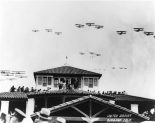
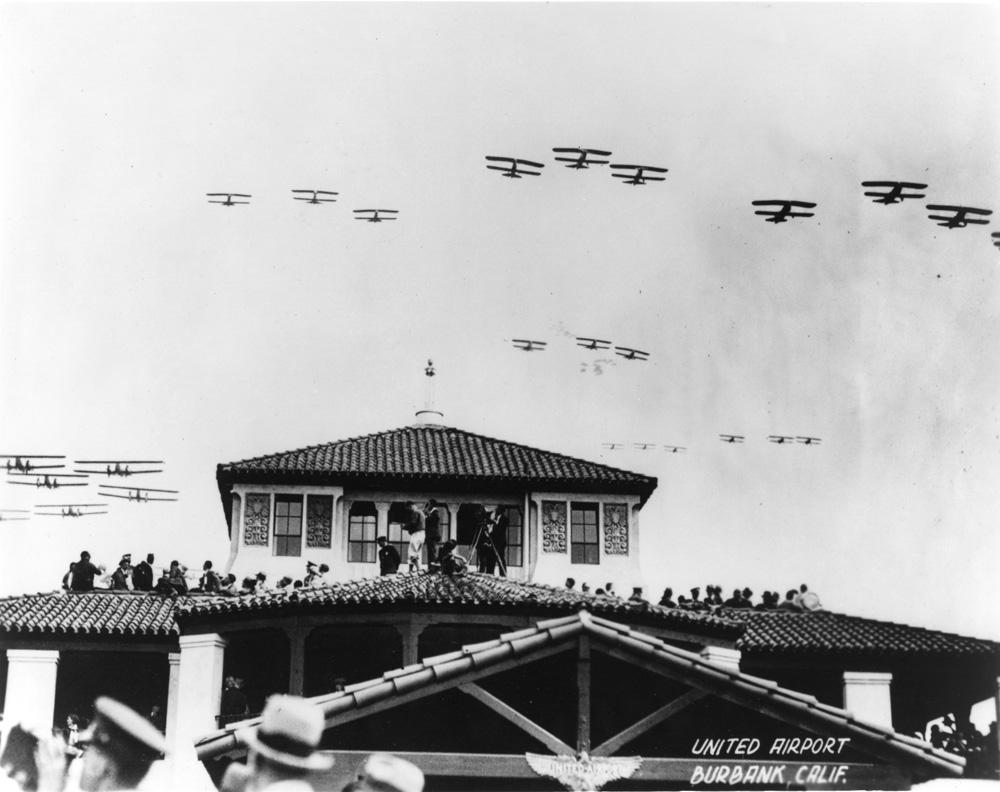
When United Airport opened in Burbank on May 30, 1930, its debut was a major public spectacle. The celebration featured air shows, flying demonstrations, and crowds eager to see the new facility, built at a time when commercial aviation was still establishing itself.
The Spanish Colonial Revival-style terminal, with its distinctive arches and central tower, gave the airport a distinctive appearance. Southern California was competing to become a center of commercial flight, and Burbank soon emerged as an important contender alongside Glendale’s Grand Central Airport.
When flying was a social occasion
The terminal offered more than a place to collect a ticket and board a plane. It became a gathering place for travelers, business figures, and aviation enthusiasts.
One of its best-known features was the Sky Room Cafe, which offered views of the airfield. With its dining and banquet facilities, the restaurant gave visitors a reason to linger. Watching aircraft take off and land could be part of an outing, making the airport a destination in its own right.



The facility became known as Union Air Terminal in the mid-1930s and developed into a principal airport serving the Los Angeles metropolitan area. Its growth reflected the region’s expanding airline service and increasing role in the aviation industry.
From passenger gateway to wartime powerhouse
Burbank’s aviation story was closely connected to the aircraft factories nearby. Lockheed’s operations grew alongside the airport, linking passenger travel with the region’s expanding aerospace industry.
During World War II, Lockheed’s aircraft production became central to the war effort. The industrial complex was camouflaged to make it less conspicuous from the air, and Walt Disney’s studio helped develop designs intended to disguise the facilities from enemy reconnaissance. The effort created an unusual intersection of Hollywood creativity and wartime manufacturing.
After the war, Los Angeles International Airport expanded its role in commercial travel, but Burbank continued serving passengers and remained closely connected to aircraft manufacturing and the entertainment industry.
The original terminal became a recognizable reminder of an earlier era of air travel, when airports offered restaurants, social gatherings and a close-up view of aviation’s rapid development.
A new chapter for Hollywood Burbank Airport
On Oct. 13, 2026, Hollywood Burbank Airport opened its new $1.3 billion passenger terminal. The 355,000-square-foot facility, built across the airfield from the original terminal, features 14 gates, expanded security screening, additional passenger amenities, and a new parking structure.
The project addresses runway safety concerns and brings the terminal up to current seismic and accessibility standards. Passengers still board and leave aircraft outdoors, preserving a characteristic of the airport’s traditional layout.
The opening marks a significant transition for Burbank. The original terminal that greeted travelers in 1930 has given way to a modern facility, but its legacy endures in the story of an airport that helped shape Southern California’s aviation industry — and once made the experience of flying an occasion in itself.