Mayor Tamala Takahashi on
fiber arts, civic leadership,
and weaving creativity into the
fabric of Burbank


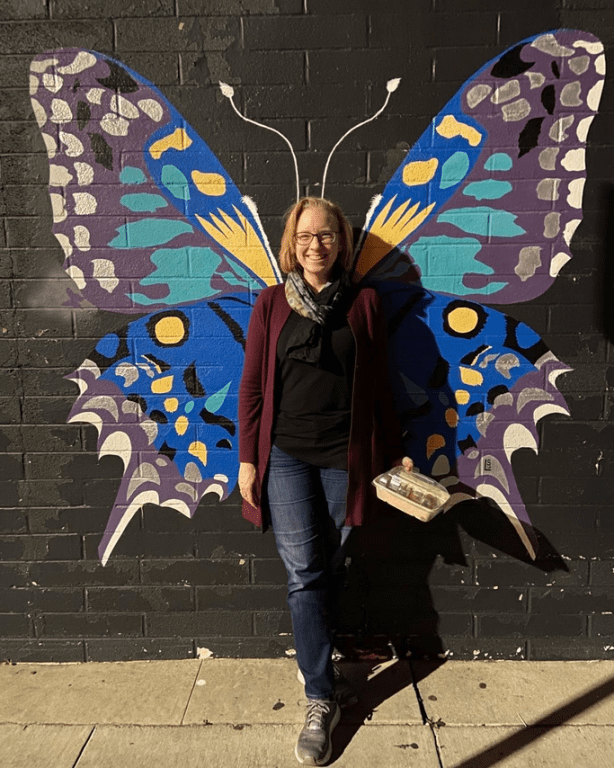
There’s a quiet rhythm to knitting—loop, pull, repeat. It’s meditative, deliberate, and deeply human. For Tamala Takahashi, Mayor of Burbank, that rhythm is more than a hobby. It’s a philosophy—one that threads through her life as an artist, a community leader, and a public servant.
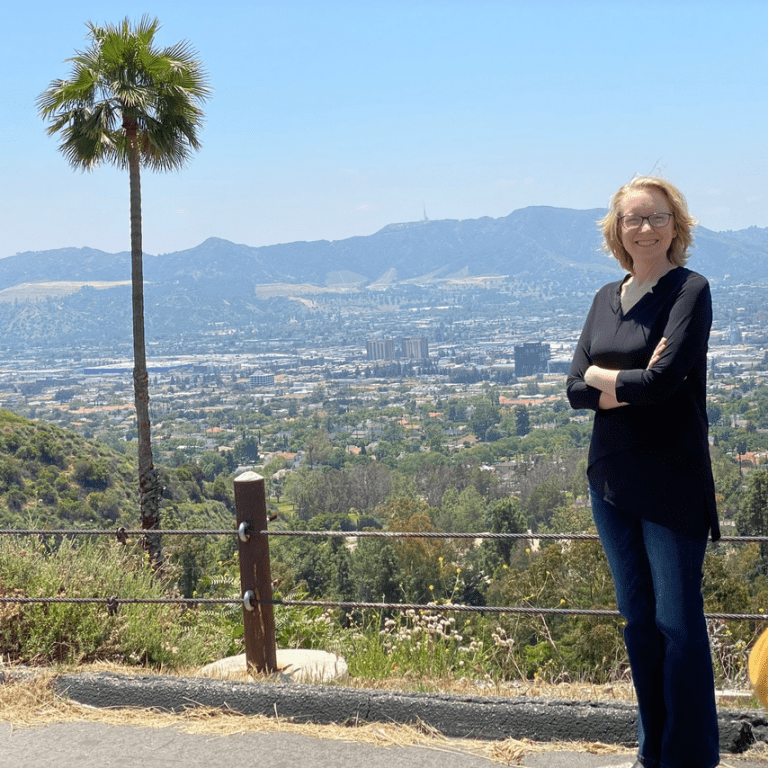
“I didn’t think of myself as artistic, I tried other things—dance, painting,drawing—but nothing stuck.”
Takahashi was impressed with knitting and Crocheting but thought it looked too difficult for her to learn, until one of her friends convinced her to come to a class. “I fell in love with it immediately, the movement, the rhythm, the structure—it felt mathematical. Like solving a puzzle with your hands.” At the time, Takahashi was immersed in the everyday life of a young parent—parks, playdates, and community activities. Creativity wasn’t front and center. But something about fiber arts—knitting, crochet, and later cross stitch— clicked in a way nothing else had before.
What began as curiosity quickly became devotion.
A Creative Journey



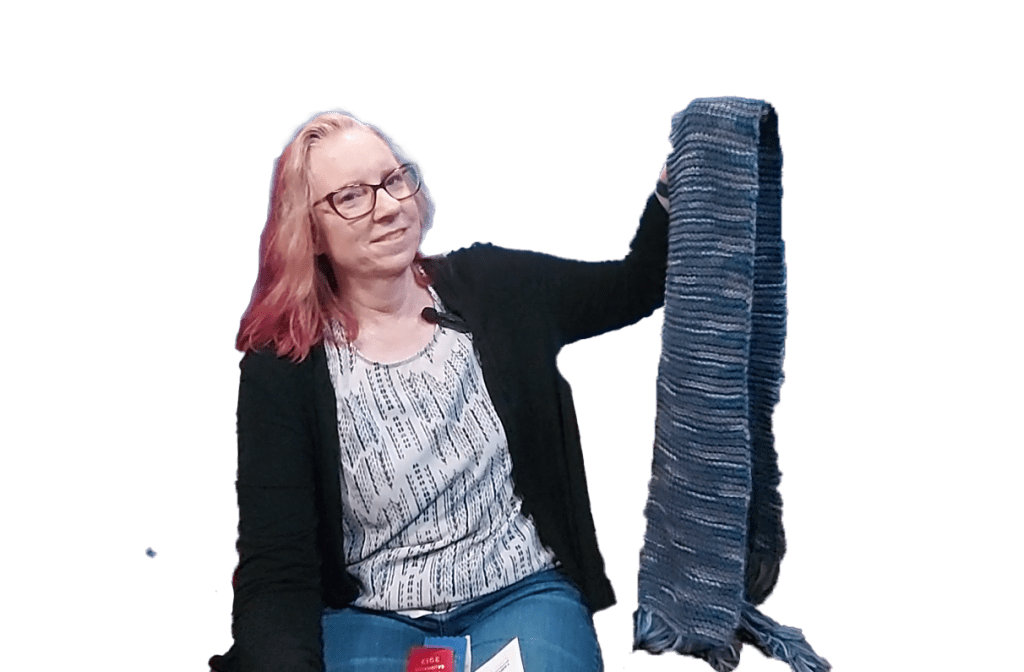
Tamala’s creative journey is perhaps best understood not through words alone, but through the pieces she has made—each one a marker of growth, experimentation, and persistence. Her earliest work remains one of her most meaningful.
“This is my first knitting project I ever did,” she says, holding it with a mix of pride and humility.
“I redid it about ten times… it’s got a little wonky bits here and there, but I like to remind myself of where I started.”
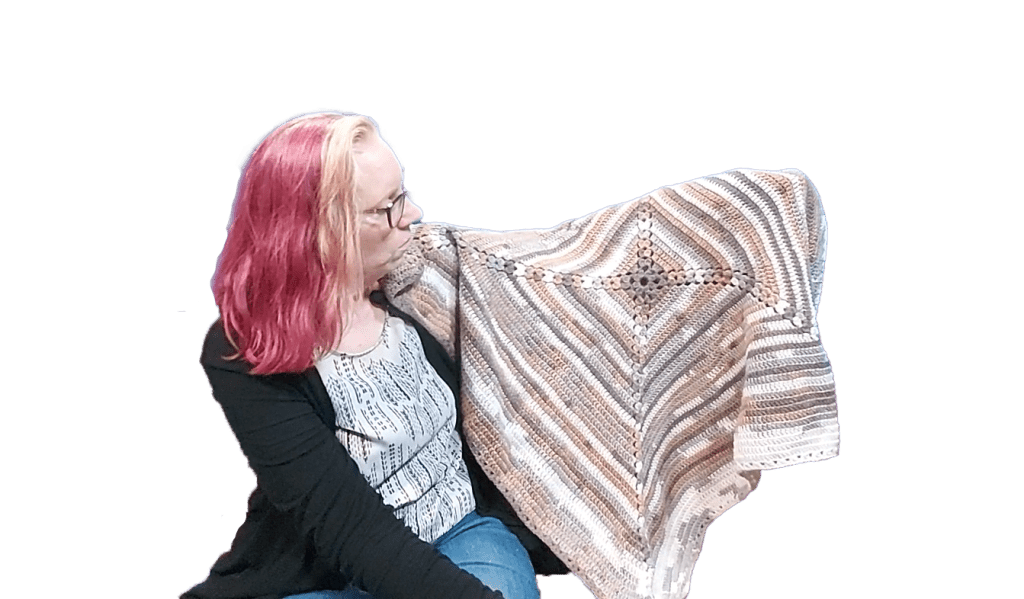
The piece, imperfect by her own standards, has become something more than just fabric—it’s a touchstone. While she rarely wears it, it lives in what she calls her “project library,” a personal archive of creative milestones. That willingness to embrace imperfection carries through her work, including pieces that didn’t quite go as planned. One unfinished blanket stands as a lesson in both mathematics and patience. Designed with triangular panel construction, the piece required precise stitch increases to lay flat. A miscalculation early on created too much growth, causing the fabric to ripple and cinch.
“It can look really nice and be fun to make, but if the math is off, it won’t lay flat… by the time I realized it, I wasn’t going to redo it.”
Rather than discard it, Tamala keeps it as a teaching tool—a reminder that even flawed work has value.
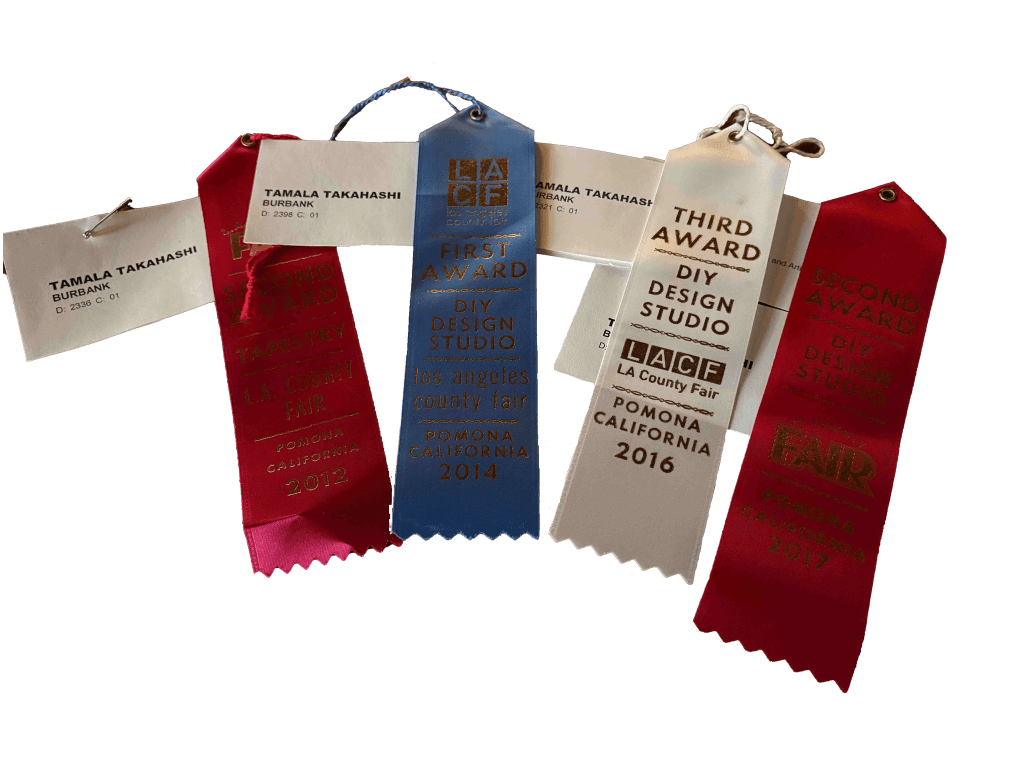
Her dedication and evolving skill have not gone unnoticed. Over the years, she has exhibited regularly at the L.A. County Fair, earning multiple awards, including first-, second-, and third place honors across various entries. These recognition’s reflect both technical proficiency
and creative exploration. Among her award-winning works is a soft, textured shawl crafted from fuzzy yarn—an intentional experiment in material and texture.
“Working with that kind of yarn gives you a completely different feel, I was playing around to see what would show up and what wouldn’t.”
Another standout incorporates delicate “California lace,” blending structure with lightness, while several of her designs explore
bold color work through classic techniques. One such piece uses a traditional mitered pattern—geometric and precise—but re-imagined through spontaneous color choices.
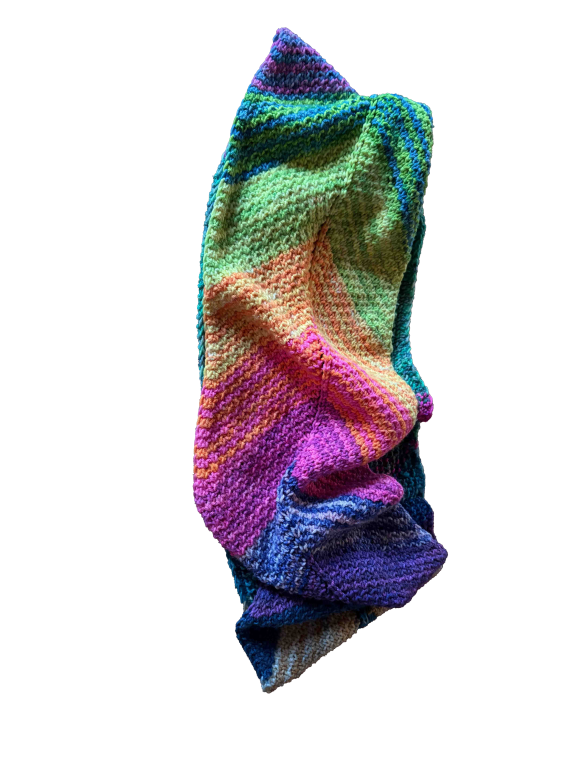
“Whatever color I feel that day is what I put in,” she says, turning a standard pattern into something uniquely her own. Color continues to play a central role in her work, particularly in a striking shawl created from self-striping yarn. The piece appears complex, shifting seamlessly through blues, greens, yellows, and warm tones—but the transformation is built into the material itself.
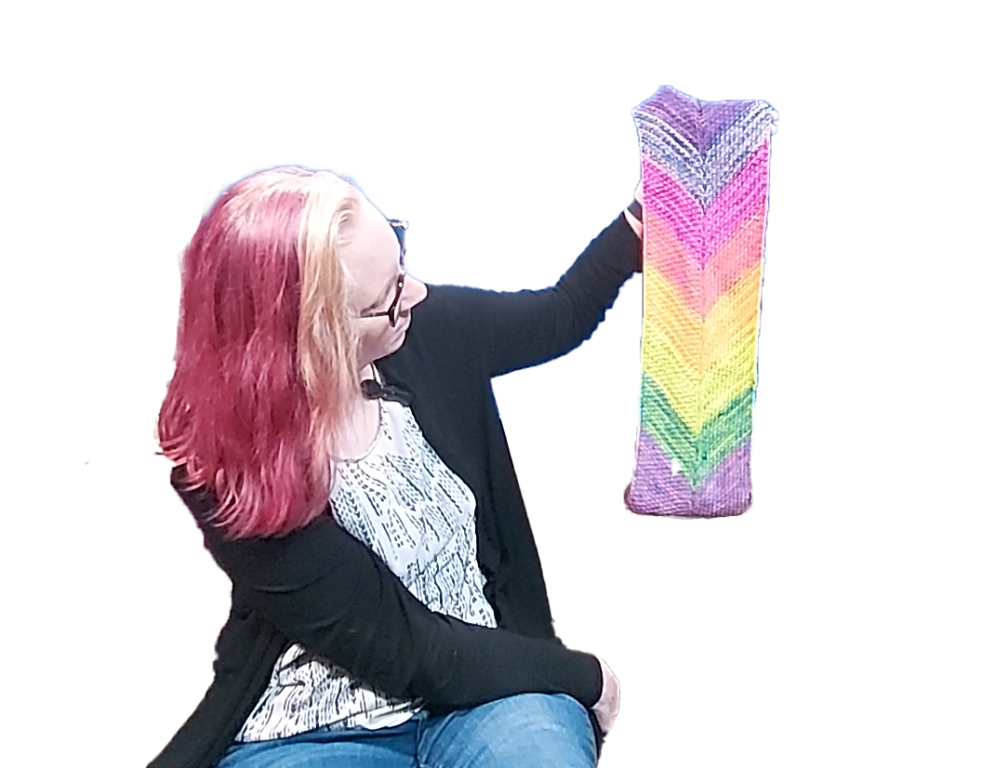
“It looks really complex, but it’s not that bad. That was really fun.”
Some pieces, however, represent milestone beyond experimentation—what she calls her “wow” works. One intricately patterned shawl, completed from a pre-existing design, earned her a first-place award and remains one of her proudest achievements.
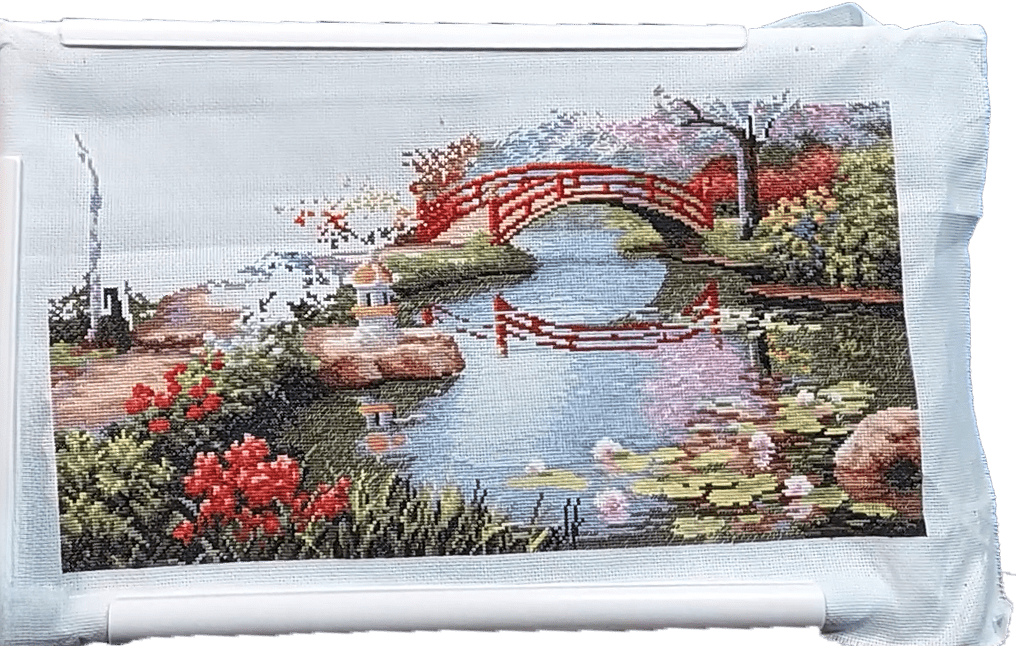
Her current focus extends beyond knitting and crochet into cross-stitch, where she is working on an ambitious, highly detailed piece featuring a Japanese bridge framed by cherry blossoms.The project involves dozens of color changes—nearly eighty shades in total—creating a rhythmic, almost meditative process. “Every time I switch colors, it’s like a dopamine hit,” she says.
Looking ahead, Tamala is exploring the possibility of designing and selling her own cross-stitch patterns, potentially launching
an Etsy shop with her daughter. While still in early stages, the idea reflects a natural next step: sharing not just finished pieces, but the creative frameworks behind them. And like much of her work, her projects often carry a quiet, personal intention. Some are
destined as gifts—handmade pieces for her children—imbued with time, care, and meaning that extends far beyond the materials
themselves.
In Tamala’s world, every stitch tells a story—not just of what was made, but of what was learned along the way.
From Yarn to Community Within a few years, Takahashi wasn’t just knitting—she was building something much larger.
In 2011, she co-founded the Nerdy Knitters and Crocheters of the San Fernando Valley, a nonprofit guild that still thrives today. What
started as a casual gathering of like-minded creatives evolved into a structured, deeply engaged artistic community.

“It wasn’t just about sitting around and chatting while we knit—though we did that too, It was about learning, improving, diving deep into the craft.”
The group hosted classes, attended events, participated in charity knitting, and even engaged in “yarn bombing”—a playful form of
public art where knitted pieces are wrapped around lampposts, statues, and other urban fixtures.
“It’s art you can stumble upon, It brings a little surprise and joy into everyday spaces.”
For Takahashi, the guild wasn’t just about fiber arts—it was about connection. A shared language of creativity that transcended age,
background, and experience. In many ways, it foreshadowed her future in public service.
The Art of Design—and Letting Go
While many fiber artists focus on finished pieces, Takahashi found her niche in design.
“I’m actually a pretty slow producer, If I tried to sell finished pieces, maybe I’d sell one every few months.”
Instead, she turned to pattern design—creating blueprints for others to follow and reinterpret. Platforms like Ravelry allowed her to share her work with a global audience, where fellow knitters could purchase her patterns and bring them to life in their own way.
“It’s fascinating, you create something, and then someone else makes it with their own colors, their own yarn, their own style. It
becomes theirs.”
Her favorite piece? A carefully constructed cowl—simple in structure but rich in texture and color variation.
“It’s about taking a basic form and layering your own ideas onto it, that’s where creativity lives.”
But perhaps what sets Takahashi apart is her relationship with the process itself.
“I love making more than finishing, sometimes I’ll unravel something and start over—and I’m totally happy doing that.”
It’s a mindset rooted in exploration rather than outcome—a rare perspective in a world often driven by completion and productivity.
A Mathematical Kind of Magic
Ask Takahashi what draws her to fiber arts, and she doesn’t talk about aesthetics first—she talks about structure.
“Knitting is like a grid, you can map it out on graph paper. Each stitch is part of a system.”
Crochet, she adds, offers more flexibility—less rigid, more sculptural. Cross-stitch, on the other hand, feels like pixel art, reminiscent of early video game design. That connection isn’t accidental.
“I’ve always been a bit of a nerd, computers, video games—that’s my background. And fiber arts feels like that. It’s logical. It’s problem solving.”
This blend of logic and creativity—of system and spontaneity—has become a defining thread in her life and it doesn’t stop at art.
From Fabric to Civic Involvement Takahashi didn’t set out to become mayor.
“I never had a moment where I thought, ‘I want to be mayor, that was never the goal.”
Her path to public office was organic, rooted in community involvement. After moving to Burbank in the late 1990s—following a job
opportunity for her husband at Disney—she gradually became more engaged in local life.
“At first, I was just being a mom, but as my kids got older, I got more involved—Parks and Rec, the library, community programs.”
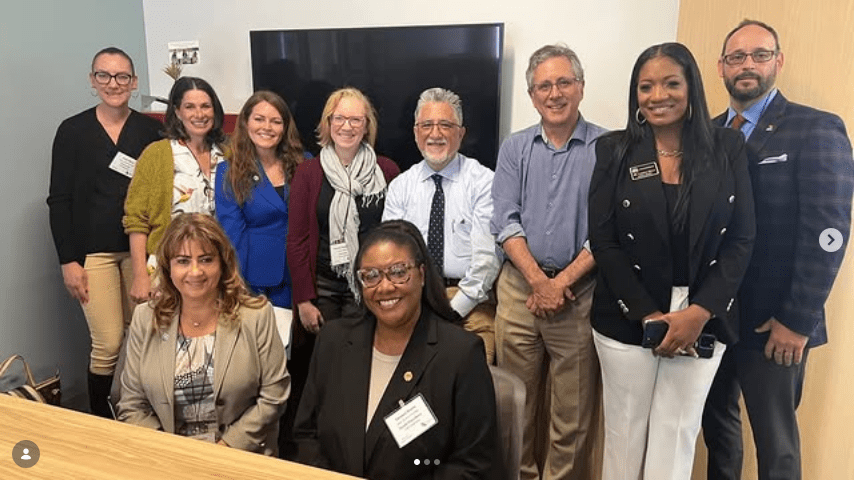
Over time, that involvement deepened into advocacy.
“I started to feel like, ‘This is my city and I wanted to help make it better.”
That sense of ownership—of belonging— eventually led her to run for city council, and ultimately, to the mayor’s office. But even in politics, her artistic sensibilities remain ever-present. Reframing the Role of Arts in Burbank. One of Takahashi’s most impactful contributions has been her effort to elevate the role of arts within the city’s economic and cultural framework. Historically, arts funding operated separately from broader city initiatives—often requiring additional advocacy and justification. That changed when Takahashi helped integrate arts funding into Burbank’s tourism portfolio.
“It was a strategic shift, we started seeing the arts not just as something nice to have, but as an essential part of our economic ecosystem.”
The results have been significant.
“There’s more visibility, more support, more integration across departments,. the arts are part of how we tell our story as a city.”
As liaison to the Cultural Arts Commission, Takahashi has witnessed firsthand the growing energy within Burbank’s creative community.
“It used to be harder to find—like you had to dig to discover what was happening, Now it’s more open, more celebrated.”
And she’s proud to have played a role in that evolution.
Creativity in Leadership
Takahashi believes that creativity isn’t just valuable in the arts—it’s essential in leadership.
“There’s a lightness that comes with creativity. A willingness to try new things, to approach problems differently.”
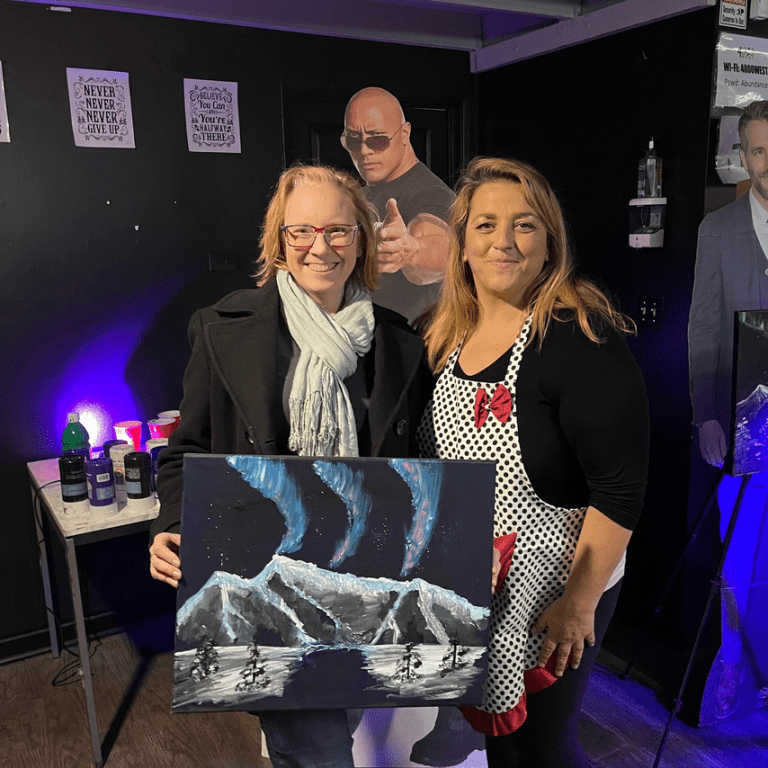
Sometimes, that expression is subtle. Sometimes, it’s visible—like her brightly dyed hair, which she notes is something of a rarity
among elected officials.
“I haven’t seen many council members with dyed hair, but it’s part of who I am.”
More importantly, she advocates for greater artistic understanding within government.
“I think every council should have someone who understands the arts, It changes how you value it, how you support it.”
For Takahashi, that understanding comes not just from observation, but from lived experience—years of creating, designing, and
engaging with artistic communities.
A Life in Balance
Despite the demands of public office, Takahashi continues to nurture her creative side—and her family life remains deeply rooted in the arts.
Her household, she says, has always been musical.
“We used to joke that we were like The Partridge Family, everyone played something—piano, guitar, strings—and we’d all just jump in
and sing together.”
While her children have pursued their own creative paths—ranging from music to digital 3D art—none have followed her into fiber arts.
Even now, with her children grown, creativity remains a constant presence.
“When they come home, the music starts up again, it’s like it never left.”
Looking Ahead: Advocacy and Healing
As Takahashi considers life beyond city council, her focus is shifting—but not away from service. A licensed therapist, she plans to deepen her work in mental health, with a particular interest in supporting individuals in high-pressure leadership roles.
“When you’re grounded, when you have that support, you show up better—for yourself and for the community.”
It’s a perspective that reflects her broader philosophy: that systems—whether in art, governance, or personal well-being—function
best when they are thoughtfully constructed and supported. And, like a well-crafted pattern, each element plays a role.
The Final Stitch
At its core, Tamala Takahashi’s story is about integration—of art and logic, of creativity and leadership, of personal passion and public
purpose. Whether she’s designing a knitting pattern, shaping city policy, or advocating for mental health, the same principles apply: structure, intention, and a willingness to keep building.
“One stitch at a time,” she might say. And in that steady, deliberate rhythm, something meaningful takes shape—not just in yarn, but in the fabric of a community.
Article Originally Published in www.theburbankblabla.com – Please support the Living Arts. https://www.theburbankblabla.com/payments